

When the instructions arrived in my inbox for the article running in the 2026 Mid-America Trucking Show event directory, I didn’t read them. I just started writing. I submitted my article, then received a response noting the character limit. What follows is the full piece, the one I actually meant to write. *Images from the show were, obviously, added later.
For a moment, forget headlines, the regulatory memos, the insurance renewals, and the message waiting for you the minute you look at your phone. Every year, people walk into this show and meet the very best of the American trucking industry. They see men and women who carry pride in their equipment, their work, and the families and businesses that keep freight moving across this country.
Look at the trucks lined up outside. Notice the polish, the customization, and the careful attention to the smallest details that only matter to someone determined to keep a machine alive for years, maybe decades. See the families gathered in front of them, taking photos beside the trucks that paid for homes, sent kids to college, and offered more than a few second chances when life demanded them.
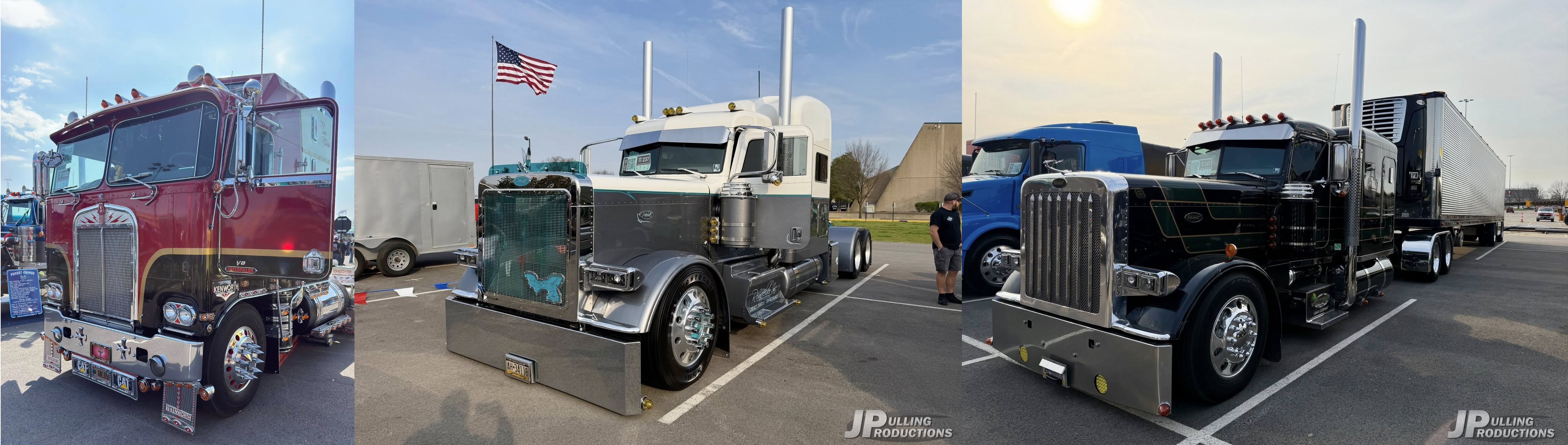
Then look at the children. Watch their faces come alive at the sight of it all. They stand amazed, absorbing the moment with wonder. Somehow, they know, without being told, this is more than just a truck.
No one arrives at pride like this by accident.
For generations, trucking moved to a rhythm people trusted. Freight rates rose and fell. Capacity expanded and tightened. No one argued with it because it was simply the nature of the work. The cycle demanded patience and grit. It asked you to live with uncertainty and keep going anyway. It could be hard and wildly unpredictable, yet underneath it all, there was logic. You might not always like it, but you could understand it.
Then, gradually, it stopped making sense.
As margins tightened, another shift happened. Freight that moved on relationships and service started moving solely on price. Years of trying to do everything right were lined up beside everyone else, reduced to a number in the same column. Award decisions shifted from “Who will take care of this load for me?“ to “Who can do it cheapest?”
In this ‘new’ environment, the advantage shifted. Carriers who spent years building relationships and a reputation suddenly found themselves listed beside companies no one had ever heard of, separated only by a rate. The late nights, the rescues, the reliability, the calls answered at all hours… None of those showed up the way the number did. Everyone saw the rates, but fewer saw what was behind them. The character, the loyalty, the service.
At first, the shift was easy to dismiss. A load made you hesitate a second longer than usual. A phone call ended, leaving a little doubt. A truck and its driver caught your eye, yet the truck still got loaded at the dock. Things didn’t fully add up, but freight still had to move.
Everyone was busy. Survival demanded attention in every direction, all at once. Rates kept falling. Insurance kept rising. Equipment costs went up every month. Drivers needed miles, families needed stability, and the clock never slowed down. When you are trying to survive another quarter, curiosity and reflection feel like luxuries you cannot afford.
The industry did what it always does under pressure. It kept freight moving.
While you were focused on keeping your business alive, something else was gaining speed. Fraud grew more organized. Identities, USDOT numbers, and operating histories became interchangeable. Paper companies became experts at looking legitimate. On a screen, the line between real and fabricated blurred so much that even the well-informed were extending trust to people who had perfected the art of illusion. “Trust” became the easiest thing to manipulate and exploit.
By the time most of the industry recognized what was happening, the environment had already changed.
The response made sense, given what was at stake. The threat was scaling, so the defenses had to scale too. We needed a way to keep pace with the rampant fraud. Human judgment, no matter how seasoned, could not keep pace with fraudulent and criminal networks built for speed and volume. Decisions migrated into software, into layered signals, into instant automated systems. Technology alone began answering the question that determines everything in freight. Can this carrier be trusted?
The new wave of enhanced technology did much more than influence decisions. It changed what it feels like to be considered legitimate. Normal life began to cast longer shadows. A new phone number, a different address, a truck parked while someone tended to family, a delay in paperwork during a hard season. To software designed to detect patterns and instability, these ordinary moments shine like red alerts.
While part of the industry indulged its technology obsession, another part was trying to survive. Simultaneously, the carriers who built their operations on deception were studying the systems. The ones structured to double broker, to recycle or steal identities, to dissolve and reappear under new names. They learned how to move around without setting off the alarms. They mastered the appearance of normalcy and consistency. Again, the art of illusion.
The outcome was a harsh role reversal. The people trying to do everything right felt watched, questioned, and second-guessed. Those who built their business on deception showed up confident and ready. If that feeling has followed you in recent years, you are not alone.
Standing here, among the lights, conversations, and reunions, something else is just as visible. The people who built this industry are not asking for weaker standards, and they are certainly not asking anyone to tolerate dishonesty. They are not asking anyone to ignore or look the other way on fraud. They want the criminals out of the market as badly, if not more, than anyone writing policy or designing technology.
What people are asking for, more than anything, is to be recognized as human.
Freight doesn’t move from point A to point B because an algorithm told it to. It moves because people make it move. Life comes with interruptions, setbacks, recoveries, and seasons that no spreadsheet can fully capture.
The fog around all of this is finally thinning, not because the risks have gone away, but because people have found the words and the nerve to describe what they have been living through. And that, however overdue, is progress.
Once something can be named, responsibility has to follow. When unseen systems are deciding who works and who doesn’t, it is impossible to stay neutral. We have to wrestle with balance. We have to ask whether our appetite for speed and the lowest rate has caused us to lose sight of the humans who make this industry run.
We must face the truth that credibility is the most valuable commodity in this industry. Not technology, not the rate, not the compliance scores. Credibility. And for all we have built to measure, verify, and automate, credibility remains stubbornly human. It is built slowly. It shows up when choosing to do the right thing, even though cutting a corner would have been faster, and no one would have known. No algorithm will ever fully capture that, no software can score it. But every person in this building knows exactly what it looks like. They’ve either lived it or watched someone they respect live it.
Technology is essential, but it must support, rather than replace, human judgment. Systems can help us move faster. What they cannot do is recreate the instinct built from years of experience, from knowing exactly who will answer the phone, from trusting someone not because a dashboard said to, but because you’ve watched them show up again and again, when it counted.
The future of trucking hinges on remembering that this industry is built on relationships.
If we forget that, not only will we make it harder to fight fraud, but we’ll risk pushing aside the men and women who built this industry. The drivers and owners who endured recessions, fuel spikes, and markets that should have broken them. The ones who chose safety over speed and integrity over convenience. The ones who kept their word, even when it cost them. They didn’t inherit credibility. They earned it the hard way.
That credibility became the foundation on which this industry stands. It became the reason freight could move on trust. We inherited this industry. We didn’t build it. They did.
We cannot afford to be the generation that forgets them.