

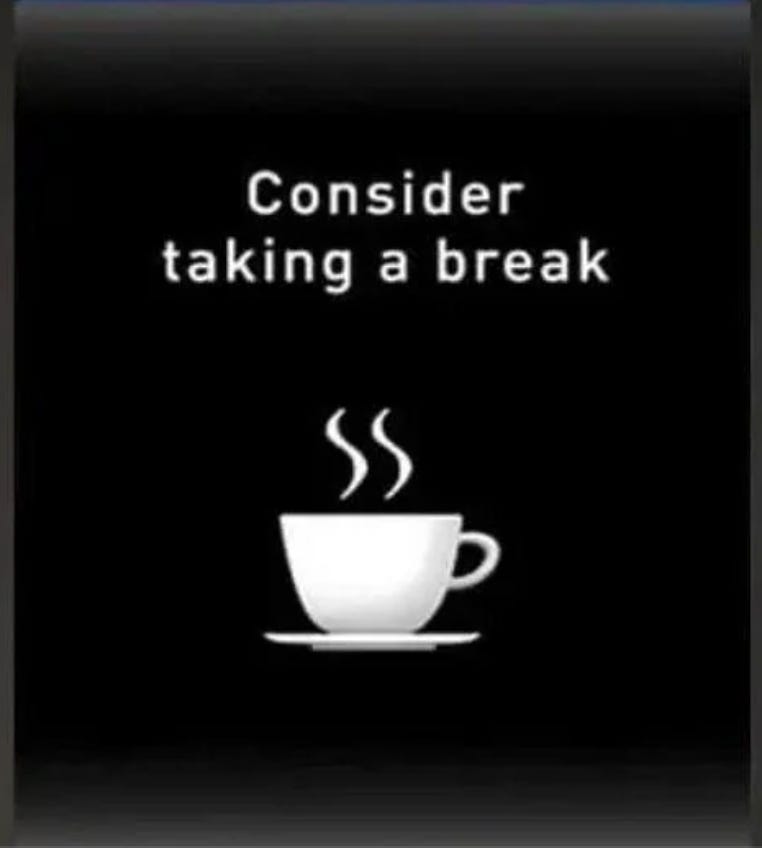
If I had a dollar for every time my car beeps at me for doing something it thinks I shouldn’t, I’d be rich, rich! You see, the way Southern backroads are designed, you can take a curve much smoother when you use both lanes to keep driving as straight as possible, as long as no one is coming, of course. When I do this, my car starts beeping and tells me to “Consider taking a break,” accompanied by a sarcastically cute little coffee mug.
I beg your pardon, I don’t need a “break.” I pay taxes, and I’ll use the whole road if I please. Perhaps you could stop telling me what to do!
Once I’m finished yelling at my car, I think about the truck drivers, and the technology inside and out of the modern semi-truck, and I try to imagine, as best as I can, dealing with ‘something’ telling me what to do, or not to do, all day, every day. My car beeping at me is annoying, yes, but the professional truck driver spends every day in his office, the modern truck that attempts to handle the details and governs his decisions every day, and it never, ever lets up.
Year after year, the trucking industry sees more technology, more rules, more algorithms, more automation designed to, or said to, make ‘something’ better, usually in the name of safety. Lane departure warnings, automatic brake systems, and front-collision avoidance technologies claim to save lives. Electronic logging devices claim to prevent fatigue-related crashes. Optimized routing claims to cut wasted fuel and wasted time. Facial recognition software claims to prevent an unwanted person from entering the network or location. But what happens when we stack enough of these systems and technologies on top of the professional truck driver just trying to work for a living?
With enough technologies, and at a certain point, we quietly relieve him of nearly every decision that once defined this highly skilled profession. He no longer decides which route to take, or which truck stop to fuel at, or how long to drive before he is actually tired, or when to start driving again, or even at what speed he will drive. What we have left is a man sitting in the cab, legally responsible for an 80,000lb+ vehicle, while nearly every decision about how that giant metal machine moves across the country has already been made somewhere else, by someone else, or by something else.
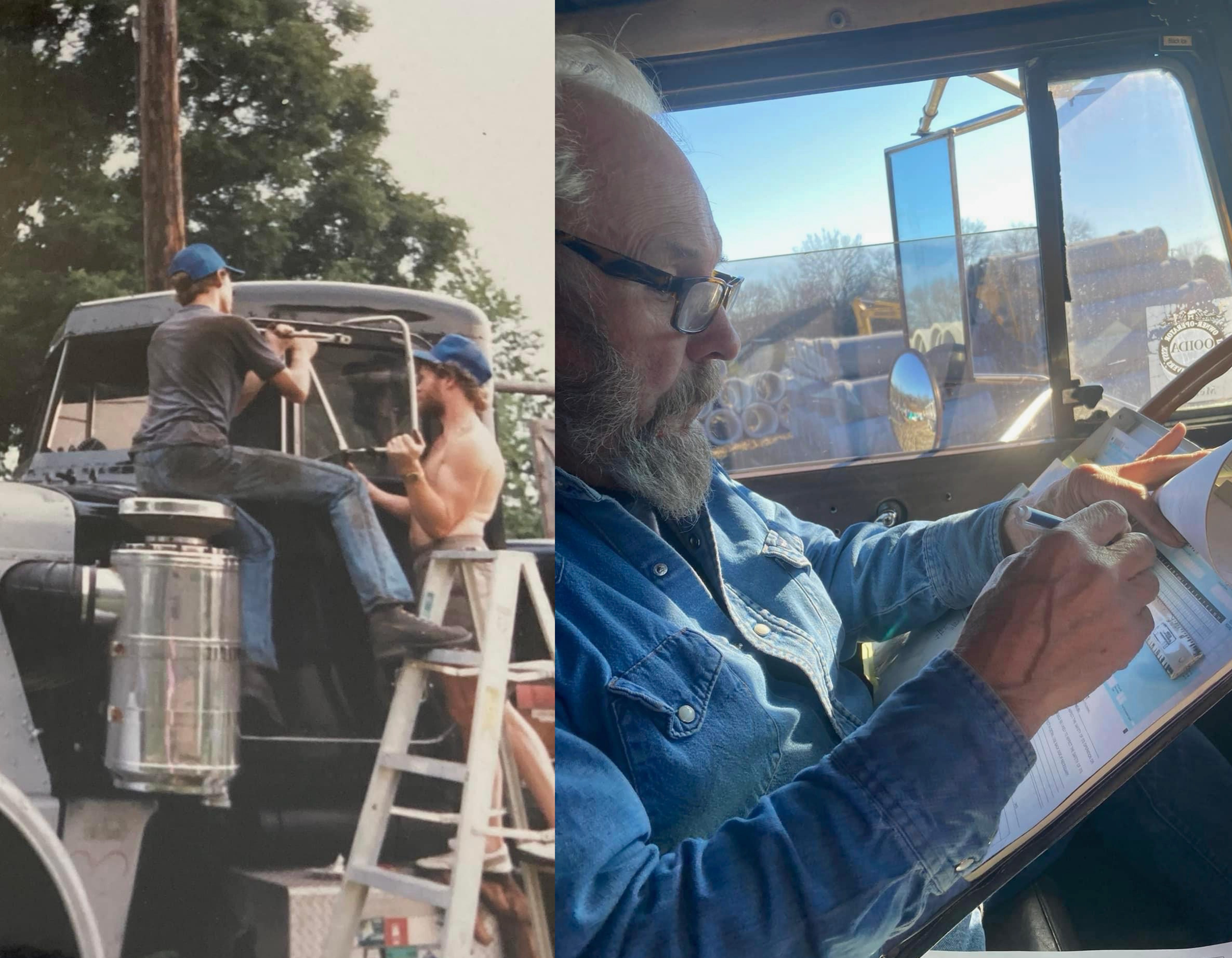
My father and grandfather don’t wait for someone to tell them exactly what to do, or how to do it, or when to do it. They just do the work that needs to be done. Work gives a man something to look at and say, I decided this, I did this, and I’ll be the one to answer for it. It gives him the means to provide, and it gives him a sense of purpose. A man looks at the world around him and knows [or should know] that his own actions and decisions shaped it. When we incrementally strip a man of his tasks and responsibilities, regardless of how noble the motives may seem, we erode his capacity to choose, to be accountable for the outcome, and to see himself as the author of his own actions. When we implement a new thing to be “more efficient” or to “improve safety,” we often remove yet another aspect of the truck driver’s job that makes his work his.
In his book, End of the Road: Inside the War on Truckers, Gord Magill, a third-generation trucker whose experience on the road outweighs anything I could summarize here, tells a story that starkly describes the frustration of the professional truck driver who must take orders from ‘the machine.’
“Sitting in that parking lot choking down Starbucks sludge, I got to pondering. I had nearly twenty years of trucking experience under my belt and had never been involved in a collision nor hurt anyone nor wrecked a truck, but due to the whims of safety bureaucrats, who were worried about compliance or being sued should an accident take place, I was being denied my agency as a professional and yet another night at home with my wife. I decided against sitting on the Mass Pike with my thumb up my ass and took action. I quickly texted another driver I knew. He had been let go by the same company. I asked him what his login credentials were for the company ELD system.
“What are you up to?”
“Going home on a Friday night. Just send me your login and your PIN.”
“Good luck. Don’t blame me if you get canned.”
And away I went. Not long after put the truck in gear and got rolling, my phone started lighting up with text messages.
“WHAT ARE YOU DOING?”
Well, I’m not allowed to touch my phone while I’m driving, and there’s also a driver-facing camera in the truck, so I ignored it.
A few minutes later the phone rang.
“Mr. Magill, what do you think you are doing?”
“Going home. It’s Friday.”
“You weren’t allowed to leave for another four hours.”
“A few years ago, before you adopted these [bad words removed] ELDs, you wouldn’t
have cared and done the same thing yourself, sir.”
“That doesn’t matter. Pull the truck over and wait your time out.”
“No sir, I’m going home.”
“Hey man, you’ve got a kid on the way. Are you out of your mind?”
It was true: my wife was pregnant with our first daughter, Vivian. Part of the reason I had agreed to be on this company’s “regional” board and out all week was to advance myself up its weird seniority system for local jobs.
“No, I’m not sitting on the Mass Pike and twiddling my thumbs because Uncle Sam says I have to. Pretty insulting when there is no regulation on car how to backdoor; rearrange the time.”
“Clean your truck out when you get back. We can’t take risks like this.”
We can’t take risks like this.
It was in this moment that I realized the trucking business had entered a different phase. A once humane and laissez-faire approach to letting grown men manage their own time had been obliterated by some outside force, with not a shred of logic. Even Canada, the frozen gulag camp whose guards are soulless bureaucrats, used to have a “Friday heading home” logbook exemption. You were permitted to take a shorter sleep and make up those lost resting hours in your own bed by adding them to the total you needed for your weekend reset. Eventually the authorities took that away-not because of any particular incident, but presumably because they lack basic humanity.”
My father told me a similar story once. He drove 45 minutes, late on a Friday afternoon, to pick up a fellow driver so that driver could be home with his wife and kids for the weekend. “Out of hours,” according to the machine, is just enough to keep a man from his family, even if he isn’t tired, and even if he’s close to home.
“A once humane and laissez-faire approach to letting grown men manage their own time had been obliterated by some outside force, with not a shred of logic.”
— Gord Magill, End of the Road: Inside the War on Truckers
We continue to build parameters into systems and technologies that “dummy-proof” a job that used to require executive function and skill. Once a job or task is “dummy-proof,” it doesn’t really matter whom we hire. The erosion of skill and responsibility is eating away at the profession, whether by design or by happenstance, and it is eating away at the culture of American trucking. We’ve introduced all kinds of technologies to “make the roads safer” and “to save more lives,” both of which sound very good, but what we’ve really done is effectively lowered the barrier to entry. In this terrifying game of limbo, how low can we possibly go?!
We ought not to wonder why the truck driver's persona has dramatically changed over the last decade.
Over time, the technology stack reduces a respected trade rooted in wisdom and judgment to commodity labor. Trucking is not a commodity. The truck driver is rendered almost irrelevant, serving as little more than a legal requirement to sit in the cab (here come the roboTrucks). We’ve killed the culture of American trucking by turning the profession of truck driving into a job that seemingly anyone, from anywhere, can do, skilled or unskilled, it doesn’t really matter. And for some wild reason, we continue to call it “progress.”
Progress for whom? And at what cost?
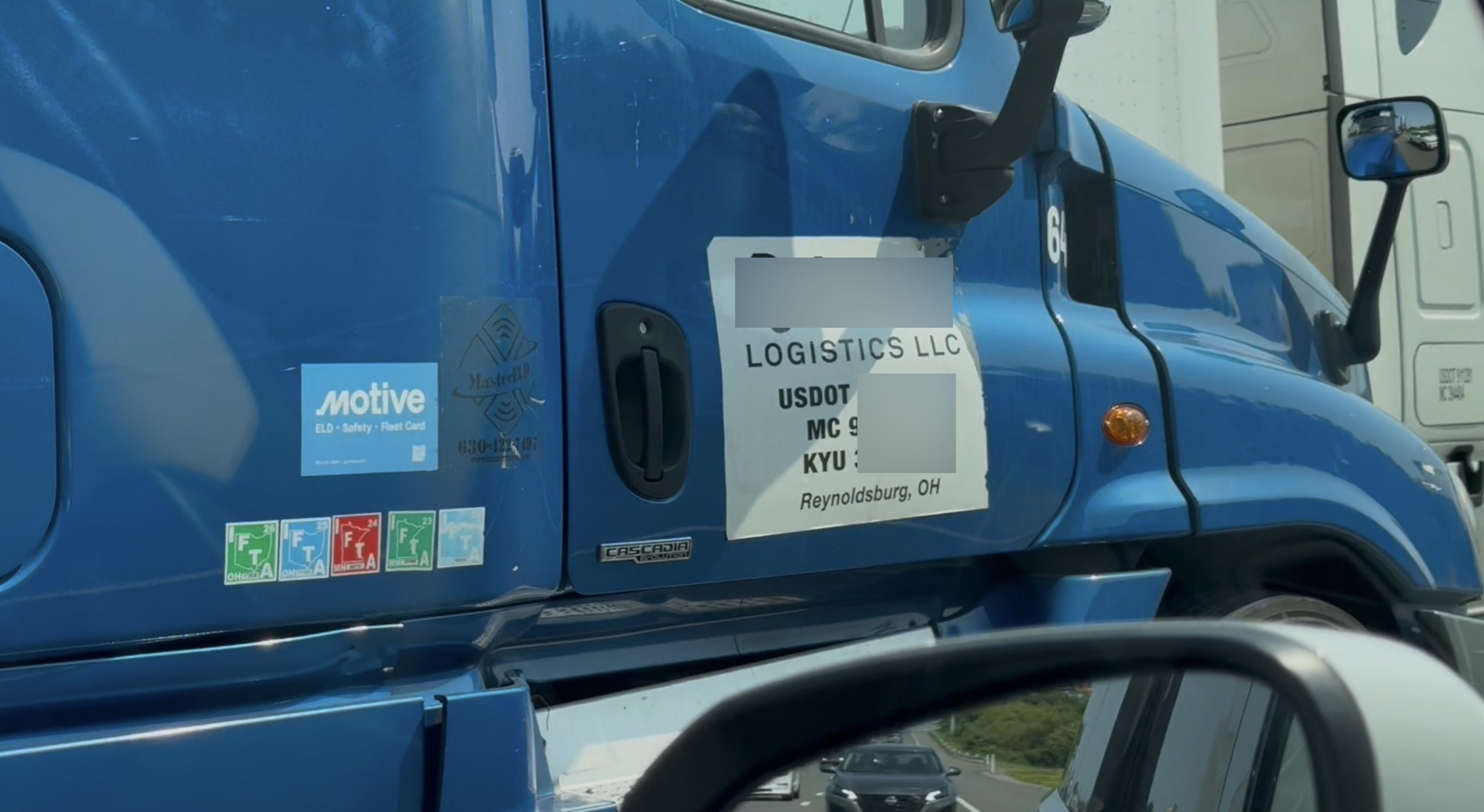
My car beeping at me around a curve on a back road is such a small thing. I can yell back at it and move on with my day. For a truck driver, the technology beeping isn’t such a small thing. He’d probably lose his voice if he yelled every time something beeped at him. His hours, routes, fuel stops, speed, and essentially everything else are decided for him by someone or something else, every day, for as long as he’s driving the truck. And yet, he will be the one who has to answer for whatever happens next, for better or for worse.
If we want drivers who are genuinely responsible, skilled, and competent, we have to stop taking away every freaking aspect of the job that makes them so, and somehow give the younger generation something worth doing. Otherwise, we’ll keep recruiting and filling the highways with the kind of drivers we really don’t want.
P.S. No wage increase or safety bonus can restore a man’s sense of purpose.
Special thanks to Gord Magill [Autonomous Truck(er)s] for granting permission to use the extended excerpt from End of the Road: Inside the War on Truckers.
Just like cops and their Glocks.
Sounds like a job 4 me:
A Poem that turned into a song.
“The Dummy in Me”
Sometimes I find it hard to speak
Other times I’m falling crawling over my feet
Why should I try if I’m only gonna wind up in defeat
Why should I care if the world don’t care care about me
in Me the Dummy in
I’ve developed plans with complications of monumental degree
Coulda drawn a straighter line if I felt a little more complete
Never one to appreciate the world as it reveled itself to me
Every time I gotta taste I spit it out with disregard and mis belief
In Me The Dummy in
I’m feeling wrong you looking strong can u help me please
I’m feeling tired like the whole world is wired without Me
In Me the Dummy in
BMI Station House Music
Writer: Andrew Browne
“One of Browne’s latest singles, “The Dummy in Me,” is a reflection of the growth he’s experienced both professionally and personally over the years”. Sammie Purcell (Rough Draft Atlanta)
“WOW, what a
STUNNING SONG” Kendall Jane Meade (Indie Dream Pop)
“Beautiful” Kate Kennedy (Substack)
“Just listened and it genuinely sounds great!! I really love the reflective feeling behind it too.”
Thank you for sharing it with me 🤍 Just subscribed as well!
RottenGirl (Substack)
Love it ♥️
Maira K (Substack)
Zazelabt@gmail
https://andybrowneofficial.com/
“The Dummy in Me” @andybrowneofficial
https://youtu.be/ysqIRsG99hQ