

For the past eighteen months, I have been investigating and documenting issues within the logistics industry that most of you largely filed under “freight fraud.” Yet, my greatest concern has never been just freight fraud. My focus has been on the systematic absence of safety accountability and the regulatory and market conditions that allowed that absence to persist. What happens when untrained, unqualified, bad actors operate on American highways, and the systems designed to stop them do not? Well, they keep running. Why? Because someone keeps giving them freight. I have consistently argued that the freight industry’s tolerance for marginal carriers was a highway safety problem, not just a cargo security one. To my brokerage readers, if you’ve been paying attention, you are ahead of the curve. To those of you who haven’t paid attention, now may be the time.
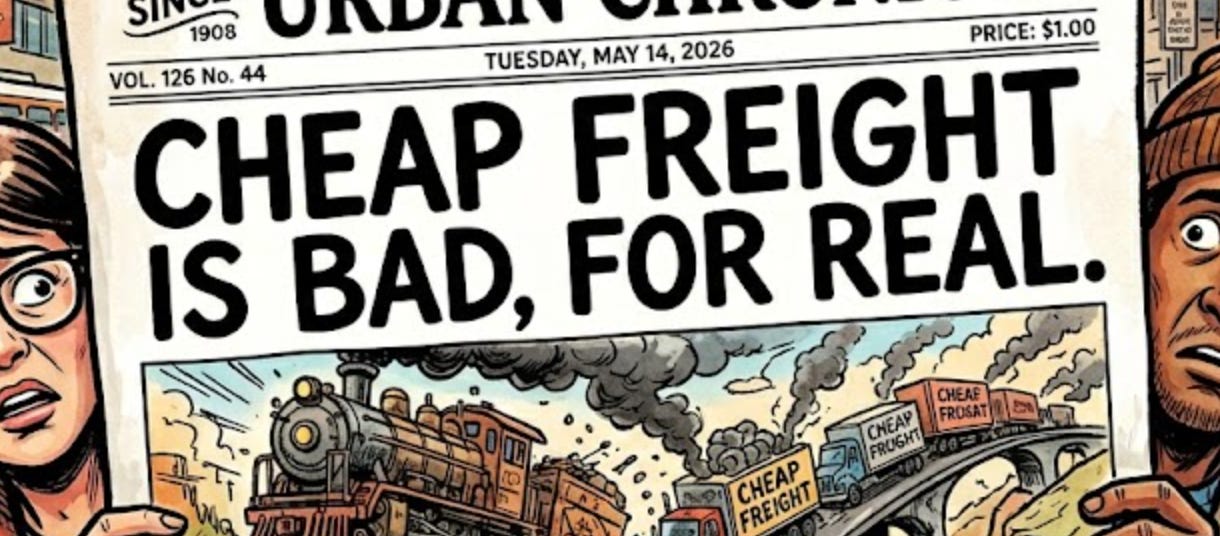
The freight brokerage industry has spent the better part of two decades optimizing for one thing… cost. We know that cheap carriers keep margins wide, automation keeps headcount lean, and volume keeps everyone comfortable. The spot market rewards speed, and speed rewards whoever asks the fewest questions the fastest. But as of May 14, 2026, that era may be over.
No one expected broker liability to go through, especially by a unanimous court that rarely agrees on anything. This is my take on where things stand. *As a note, I am not an attorney, and nothing in this article constitutes legal advice. That said, if you are reading this and wondering whether you need one, the answer is probably yes.
Fraud vetting and safety vetting are not the same.
Almost everything on my ‘takes’ list starts here. This is the most important. The industry’s response to freight fraud was strict rules about who could or could not haul freight. Some of those rules lack common sense in the context of trucking operations. My concern is that we will do the same thing in response to the SCOTUS ruling.
Brokers have built carrier vetting processes in response to double-brokering, identity fraud, and cargo theft. Yes, those are real problems that require real solutions, but the red flags that signal a fraudulent carrier and the red flags that signal an unsafe one overlap only partially. A carrier that passes every fraud rule and can still be deemed as unsafe. There may be unresolved hours-of-service violations and an out-of-service history that should disqualify them from a load, but those don’t throw fraud red flags. Brokers who believe their fraud-vetting framework meets a safety vetting standard are more than likely going to find out otherwise.
Conditionally rated carriers are cooked.
A conditional safety rating has, in practice, functioned as a yellow flag that the industry tolerated. Capacity was tight, rates were very good, and the rating was old. It’ll be okay, right? Not anymore. The conditional safety rating was cited in Montgomery v. Caribe Transport II, LLC, and will continue to be cited in future cases.
Asking for a “strong solo” is evidence.
Every informal communications channel used to move loads is a discoverable record. Your group chats, Telegram, WhatsApp, emails, DMs, and text threads. Yes, all of it.
Strong Solo Sergey is going to need a new line of work.


Freight brokers hire motor carriers, not truck drivers.
This has always been true and will continue to be true. The legal relationship in freight brokerage is with the motor carrier. Brokers who ask for driver-level records, license numbers, MVRs, personal identifying information, ELD data, etc., under the belief that it demonstrates thoroughness, may inadvertently establish a level of control over driver selection that plaintiffs’ attorneys will argue makes the broker more culpable, not less. More data is not automatically better vetting.
Brokers do not speak motor carrier compliance.
Compliance language is native to motor carrier operations, but not to freight brokerage. In my experience, it was said that it is “better to be ignorant of motor carrier regulations than to know what is right or wrong, then proceed with booking someone doing it the wrong way.”
When carriers offer brokers guidance on safety vetting, brokers should listen. The internal compliance frameworks that brokers draft over the next few months will expose those who are listening and those who are not.
Crash count is not going to work.
Crash counts on an FMCSA record should not be used as a proxy for safety, and building rejection logic around them is a problem in itself. A carrier can have multiple crashes on its record in which the truck driver was not the responsible party. Perhaps they were rear-ended at a weigh station, struck by a distracted motorist, or the passenger vehicle beside them fell asleep and ran into the truck. Yes, this is a +1 crash on the FMCSA record, but that doesn’t mean you’re dealing with an unsafe operation. Brokers who build automated carrier-rejection criteria based on crash-count thresholds, without any mechanism to assess fault, context, or crash per mile, will push out carriers with good safety cultures on the basis of data that does not mean what they think it means.
Automated tendering and booking...
We have spent years treating manual steps in carrier onboarding, vetting, and selection as inefficiencies to be eliminated. Every human touchpoint was a cost, a delay, and a problem that automation could surely solve. In my opinion, that operational framework is now inverted. A documented human review of a carrier’s safety record before tender is better evidence of due diligence. An algorithm that selects the carrier without one is, again in my opinion, a liability gap. Manual friction in the booking process is, as of now, not something to optimize away.
If it isn’t documented, it didn’t happen.
Before I came back to freight, I worked in the medical field. There’s a saying, “If it isn’t documented, it never happened.” It would be prudent for the industry to understand how diligent medical documentation can save a company from being held liable. Is it tedious and time-consuming? Yes. Can it save you? Also, yes.
You may know exactly how to vet motor carriers, but knowing how to document that you vetted the motor carrier, in a way that will survive litigation discovery, is a significantly different task. Most brokerages have had no reason to encourage or enforce a culture of documentation. I do think this will change as the vetting process will need to be documented, followed, and defensible. All three, at all times.
Good brokers and good carriers will be okay.
The ones who were already doing the work are not panicking. The ones who weren’t doing the work… well, there is probably a good reason to “crash out,” as the kids say.
Mega-brokers and power-only.
Scale and automation define the competitive model of the largest brokerage operations, but this may also make them the most visible defendants. They have A. the deepest pockets, and B. built their infrastructure on a high-volume, algorithmically-assisted carrier selection model. The current legal environment will call into question every step of the automated processes.
Trucking companies with a brokerage arm have a strong advantage.
When your core business is operating commercial motor vehicles under FMCSA authority, compliance and safety shape every decision. Asset-based carriers running brokerage divisions have a structural fluency with safety vetting that pure brokerages generally don’t. This is now a competitive and legal advantage.
So, brokers do know how to vet motor carriers?!
We will see over the next few months what brokers do have or do know, or what they have claimed not to have or not to know. SAFER, FMCSA carrier monitoring tools, insurance verifications, safety rating histories, and all of the meaningful carrier safety data have been available to brokers for years. The argument that adequate vetting was impossible, or too expensive, will be very difficult to make in discovery when plaintiffs’ attorneys demonstrate what information was accessible and when.
Historical rate data may be irrelevant.
Spot market rate benchmarks built on a carrier population that includes carriers who undercut rates, run equipment that is poorly maintained, and employ drivers who are poorly (if, at all) trained will drift from market reality as those carriers are pushed out of the market. Algorithmic pricing tools trained on historical data may mislead brokers on lane costs during this transition. The tools will still produce outputs, but they will be incorrect.
AI doesn’t know trucking.
There are a thousand regulatory and operational nuances in freight that language models do not understand or simply confuse. The amount of AI-written analysis currently flooding freight industry publications and LinkedIn feeds is produced by systems that don’t understand this industry and have no working knowledge of it. Read it if you want. I’d caution against using AI to write your compliance strategy without full review.
Open questions.
As with most of you, I have many questions. Most of them will probably be answered by the next couple of court cases.
What is a safe motor carrier?
This has yet to be defined outside of a conditional safety rating. FMCSA safety ratings were designed for regulatory purposes. They were not designed to function as a legal standard of care in civil litigation. As of now, they are functioning as one because nothing else exists.
Can we blame AI?
I’m going to assume no here, but AI is heavily used, so the question remains. If an AI agent tendered the load and booked the carrier, who is at fault? If the legal framework for broker liability assumes a human made a vetting decision, what happens? If the carrier selection was made by an algorithm and not a human, does the broker bear full liability for the system’s outputs, or will software vendors share exposure?
Does ELD data access create more liability than it resolves?
If brokers gain access to driver hours-of-service data, they acquire knowledge of potential violations. Whether that knowledge creates an affirmative duty to act and what liability attaches to a broker who had the data and tendered the load anyway have not been tested. It is a question worth asking before the access becomes standard practice.
…
I do not know what will happen over the next few months or years. I may have some of this wrong. I have been wrong before, and I will be wrong again. What I do know is that cheap freight was never actually cheap. The freight industry’s tolerance for cutting corners on carrier safety has always had a cost. And that may finally catch up.