

Four people are dead in Jay County, Indiana.
On February 3, 2026, Indiana State Police responded to a fatal crash involving a semi-truck with a triangular logo. The driver, 30-year-old Bekzhan Beishekeev of Philadelphia, PA, swerved to miss another vehicle, rather than braking.
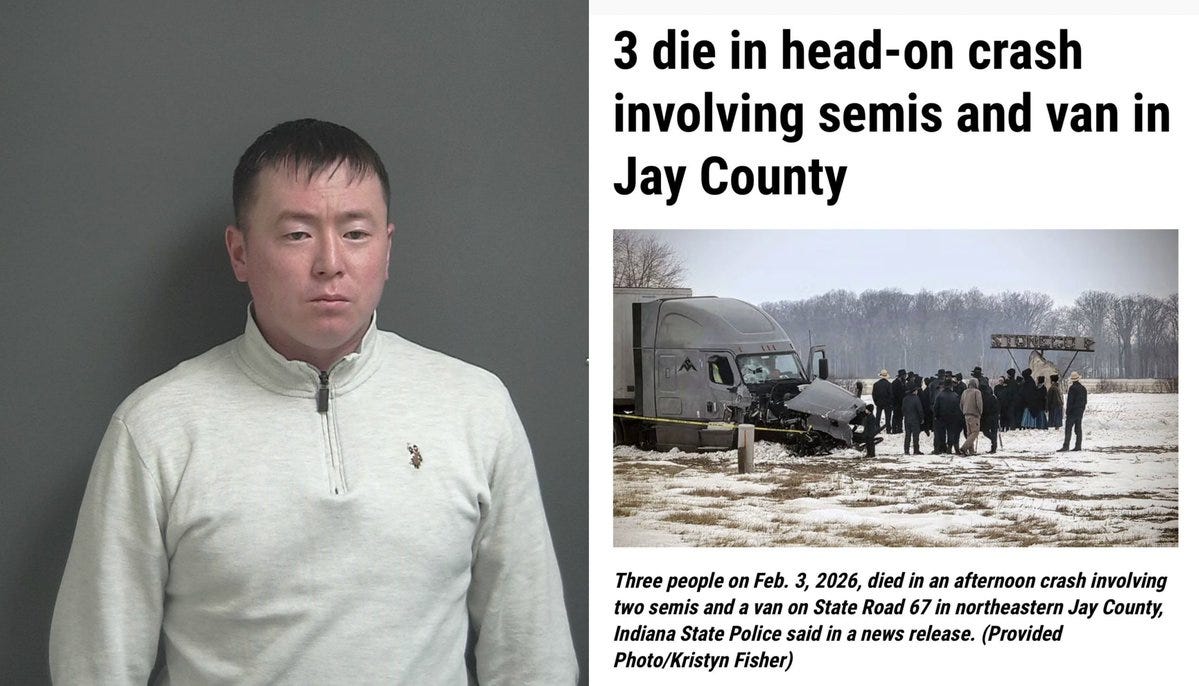
This was yet another tragic accident that DID NOT have to happen.
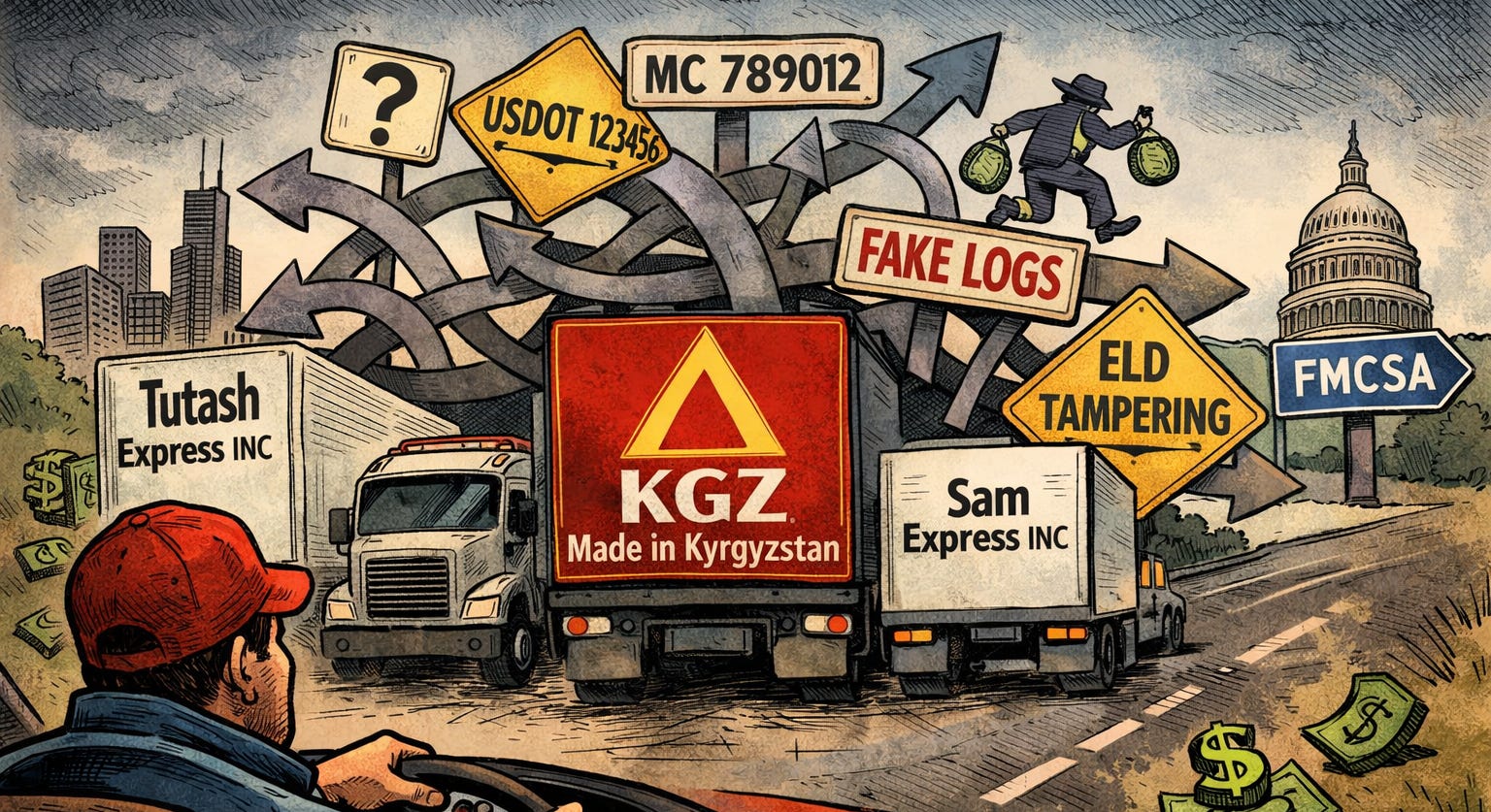
The truck involved was operating under the authority of an Illinois-based motor carrier that is part of a broader web of interconnected trucking companies. On paper, each company looks separate, but in practice operates as a single, unified enterprise.
The triangular logo is all I needed to run with this one. I knew what it was as soon as I saw it. This operation has come up time after time within the FreightX community.

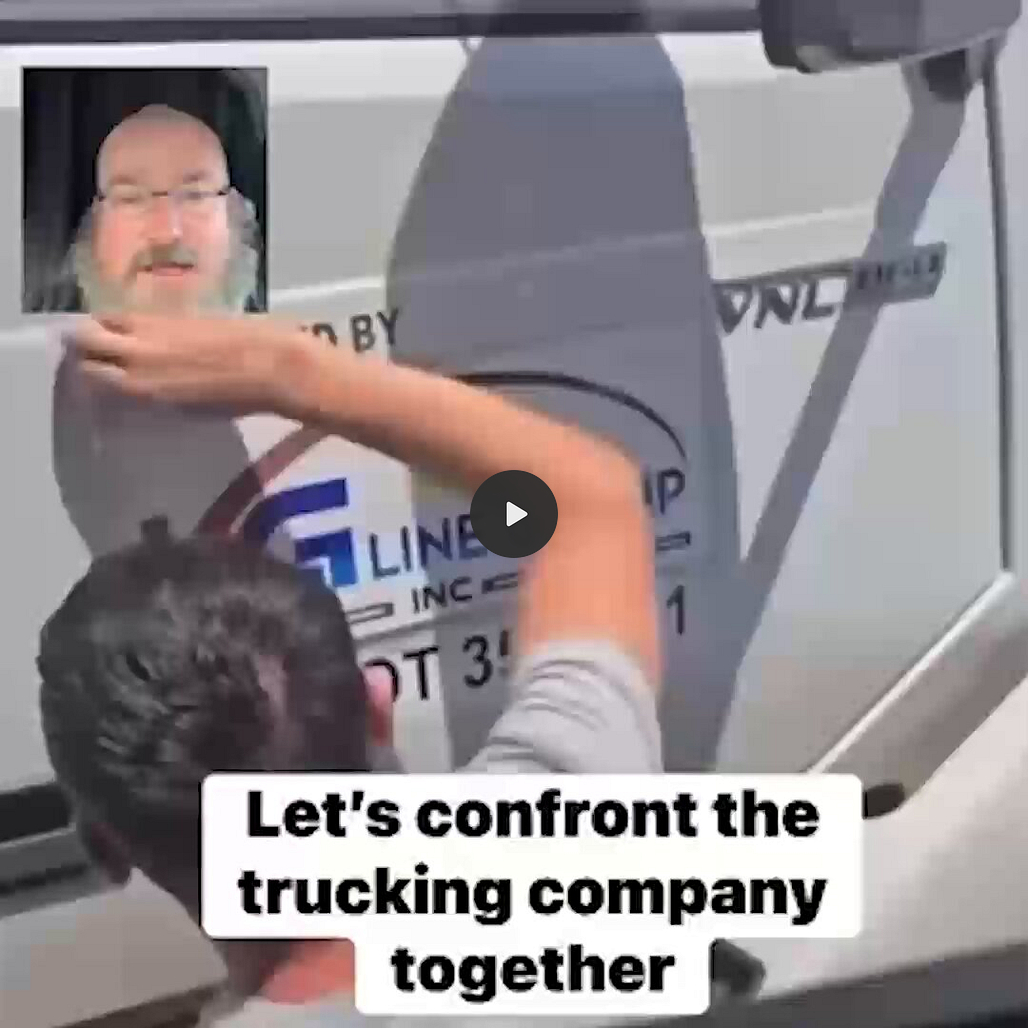

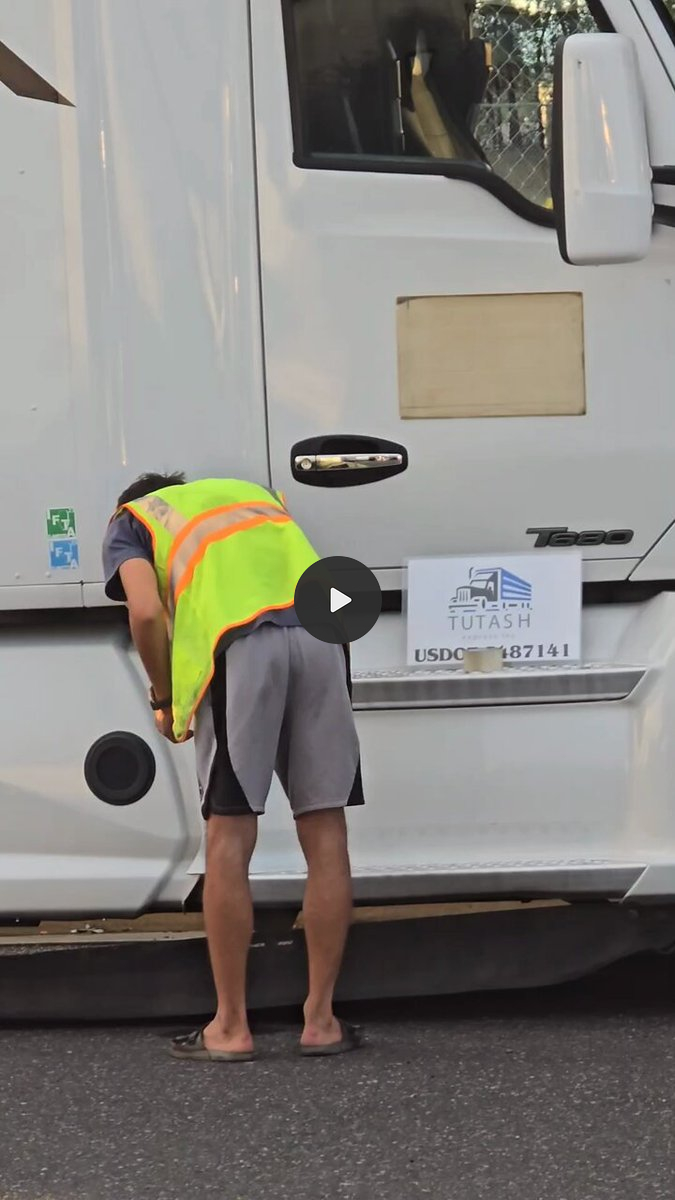
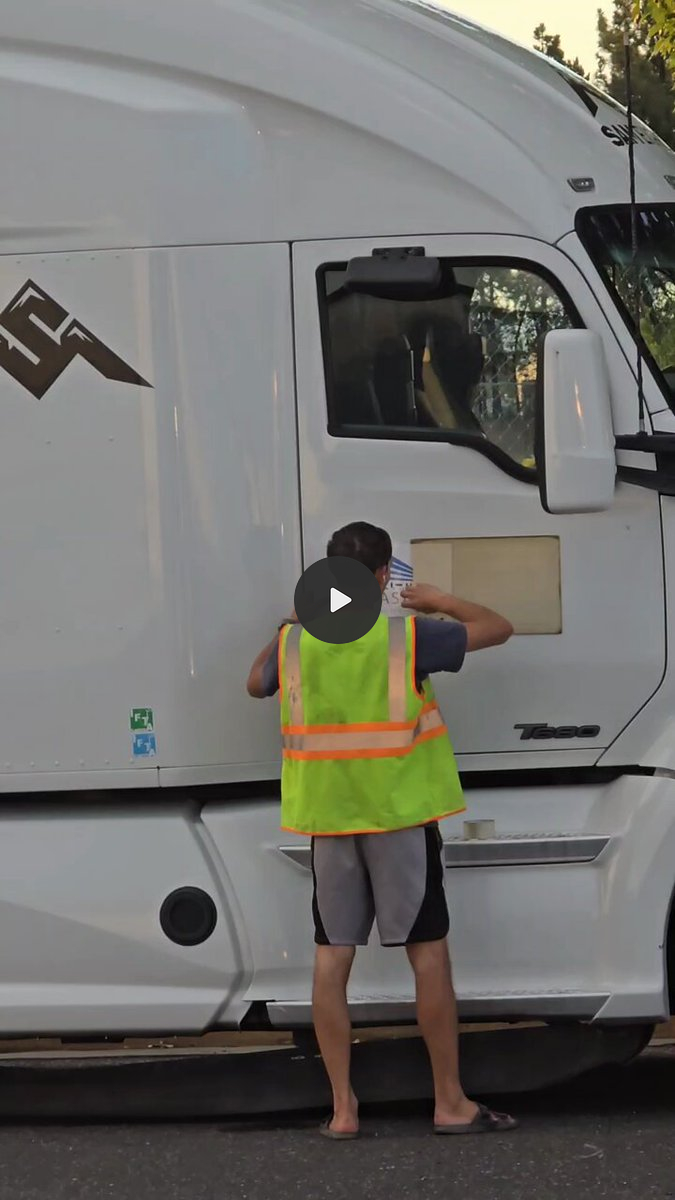


Which company did the truck belong to in this wreck? I’m not sure, but one of them. The constant movement is why pinning the crash to a single company isn’t straightforward. And why that ambiguity itself is part of the problem.
They’re all the same.
Public FMCSA records show multiple active trucking authorities tied to the same VINs, addresses, and officers, including KG Line Group Incorporated, Tutash Express Inc., Sam Express Inc., AJ Partners, and others.
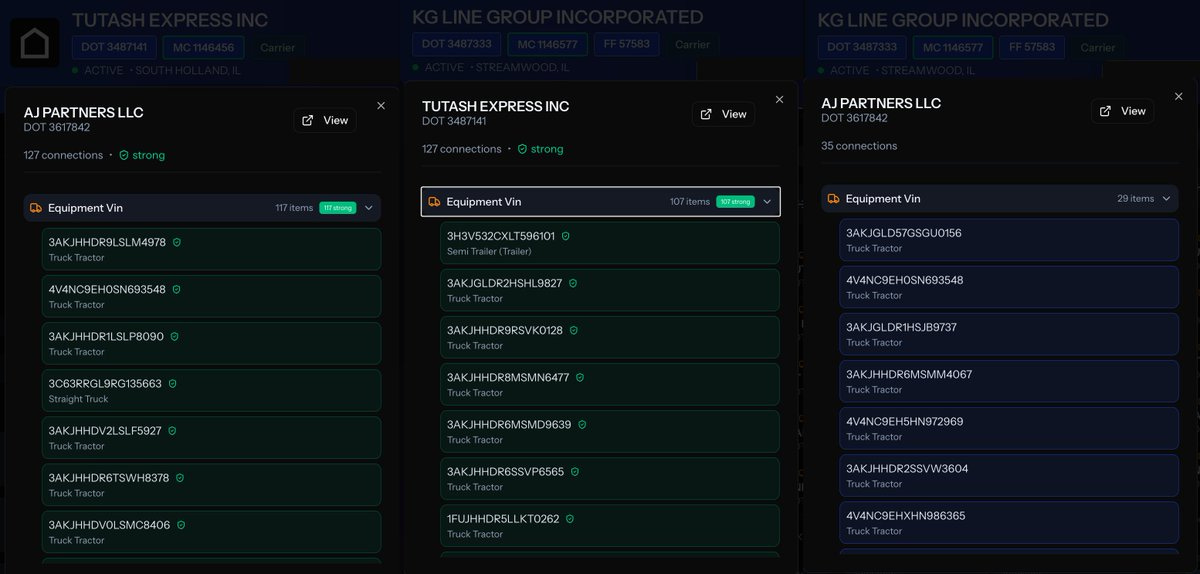
These carriers present themselves as independent businesses. But court filings, service records, and publicly available authority data suggest otherwise. They share officers, overlap in operations, and appear to rotate trucks, drivers, and license plates between authorities.
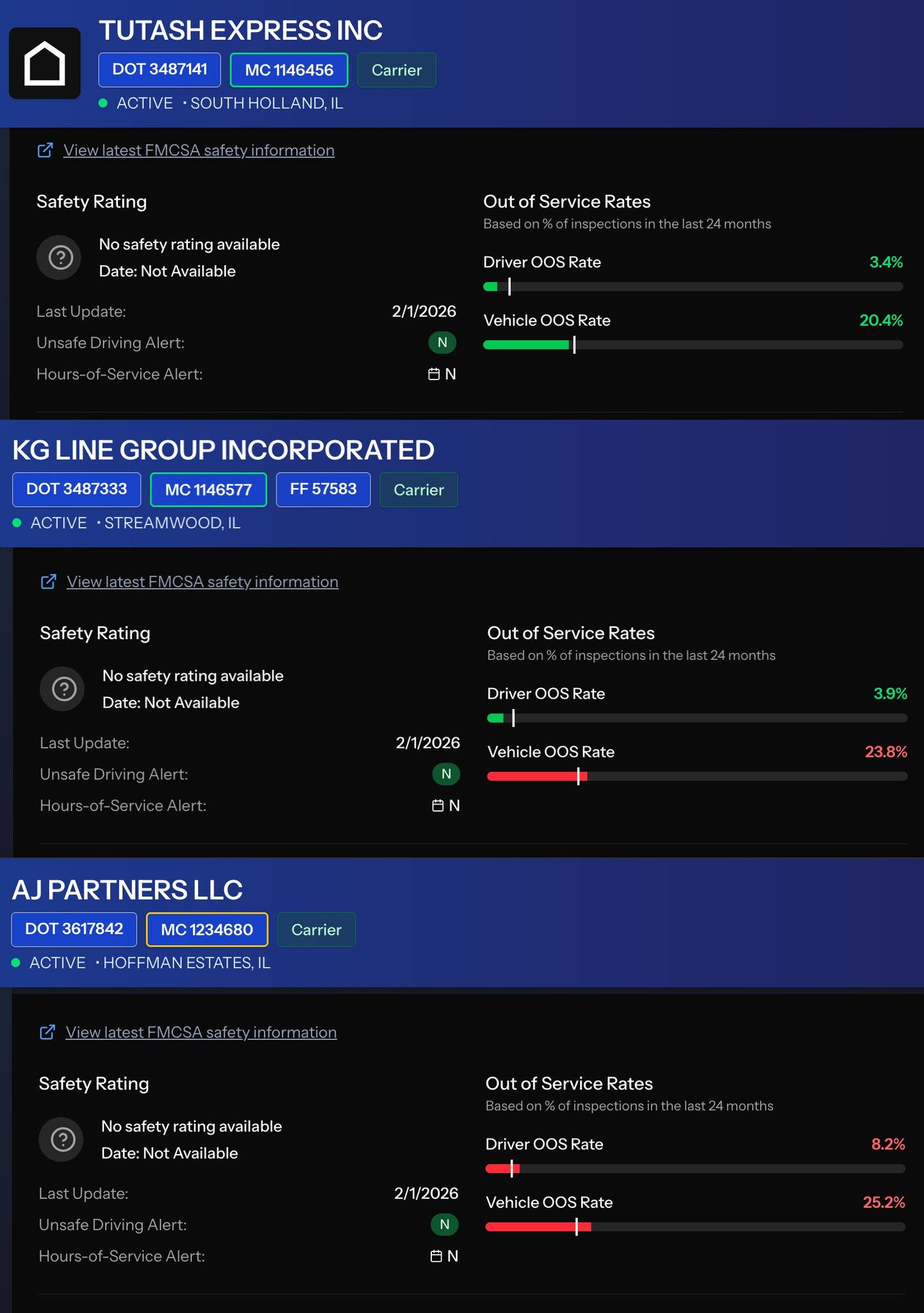
Already Under Scrutiny
Months before the Indiana crash, this operation was already the subject of a federal civil complaint filed in the Northern District of Illinois, not for a crash, but for how it was doing business.
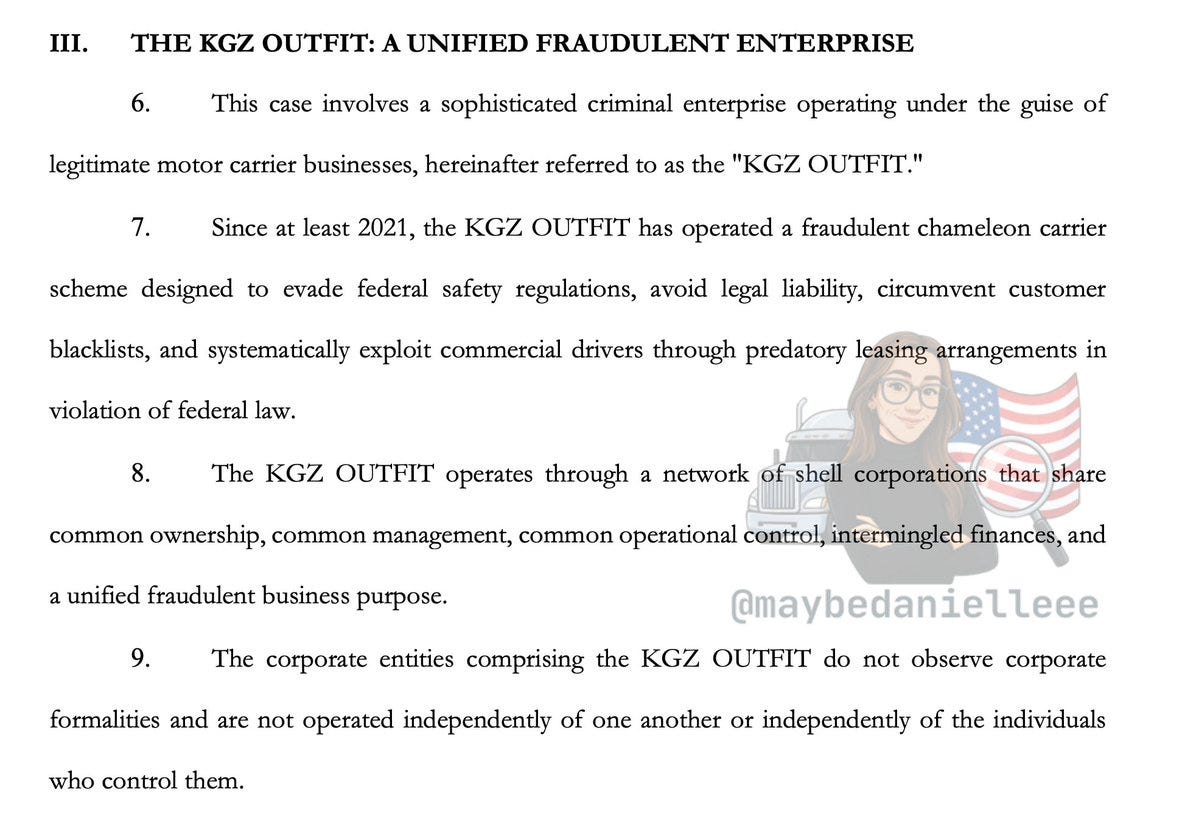
At its core, the case alleges that several Illinois-based trucking companies, operating under different DOT and MC numbers, were never truly separate businesses. They were run as one outfit.
According to the filing, drivers are recruited with promises of a high percentage of revenue, legitimate dispatch services, proper insurance, and compliant logging.
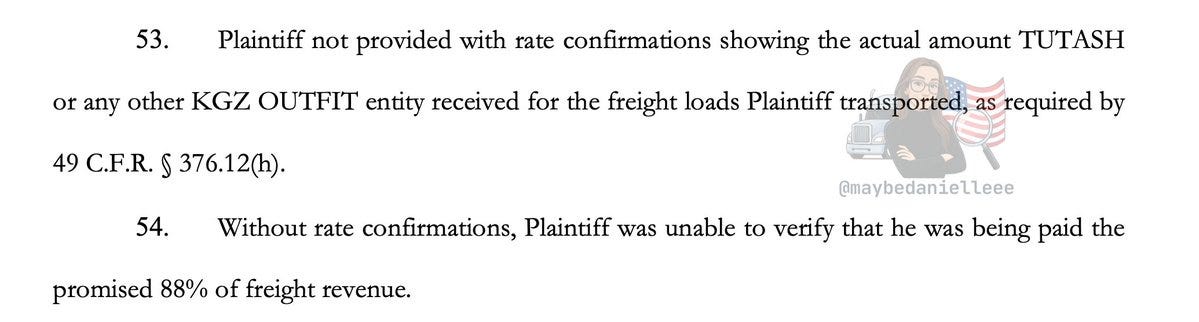
Written leases are either incomplete or never provided. Rate confirmations, which are required so drivers can verify what a load actually paid, were not given. Despite that, money kept coming out of paychecks, without receipts or explanation. Fuel, insurance, dispatch fees, repair charges, and ELD fees.
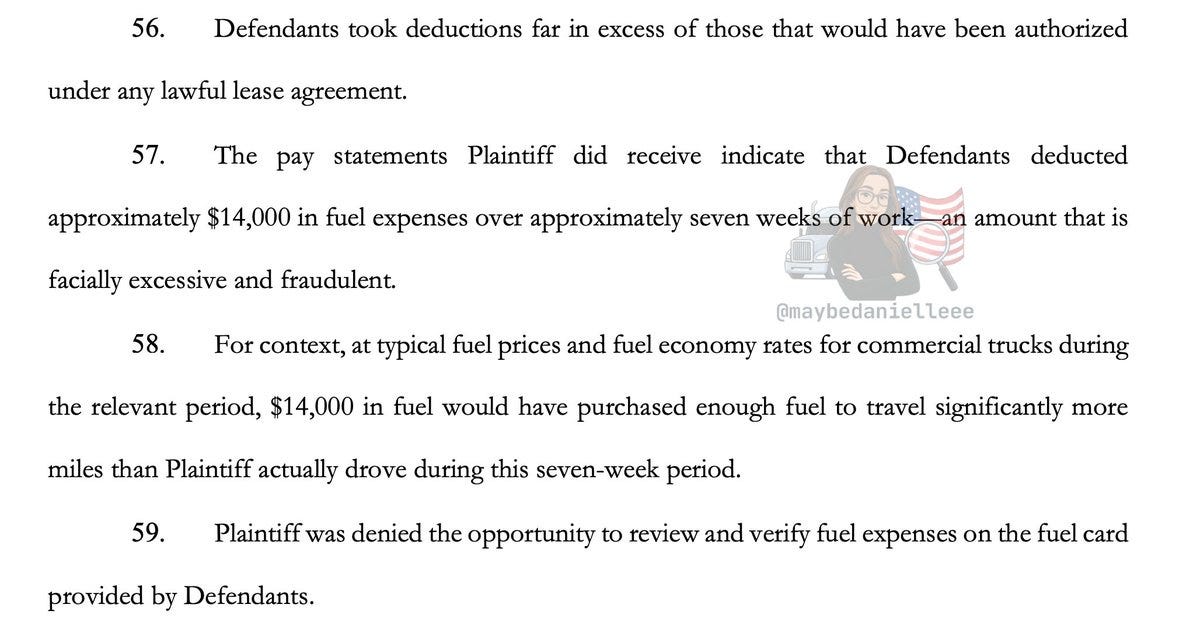
One driver’s pay records showed roughly $14,000 in fuel deductions over about seven weeks. Based on mileage and fuel prices, this is theoretically impossible.
The lawsuit also alleges that drivers were quietly shifted between different carrier authorities [for reference, scroll back to the top of the article and watch the videos]. Loads might be dispatched under one DOT number, while insurance or logging was tied to another. On paper, everything stayed “active.” In practice, responsibility was constantly moving. If something went wrong, it wasn’t always clear which company was actually on the hook.
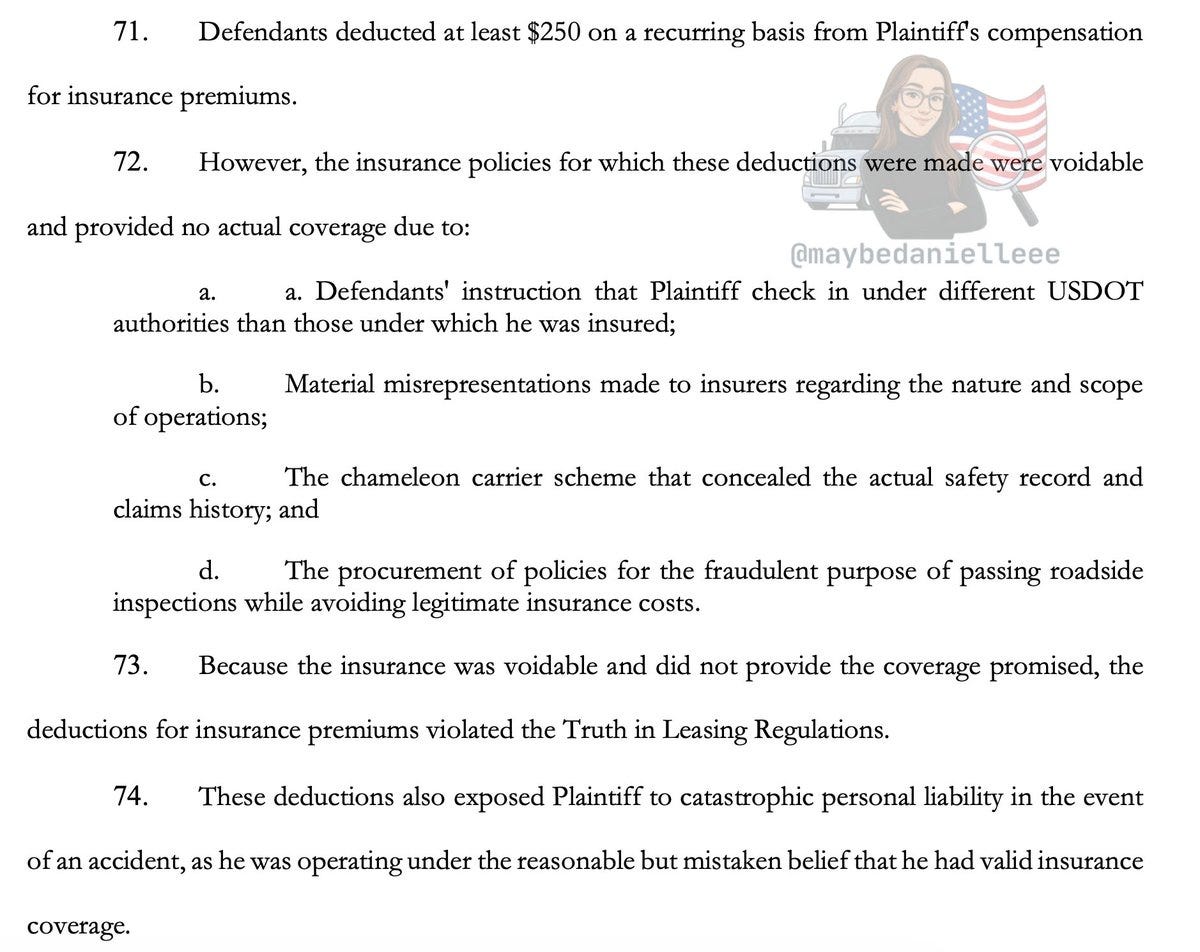
When it comes to insurance, the complaint alleges that drivers were charged for insurance policies that could be voided because they were instructed to operate under authorities other than those listed on the policy. In other words, drivers believed they were covered, but may not have been.
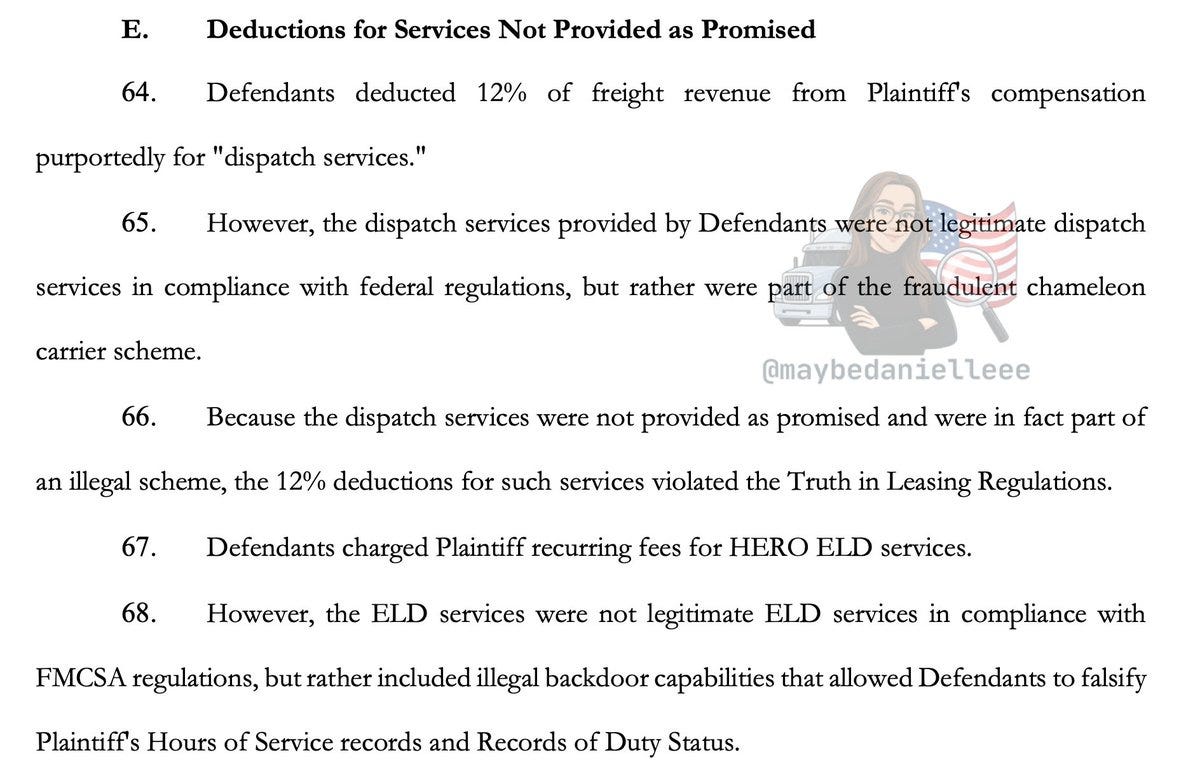
The case also raises serious questions about the safety (compliance) tools. It alleges that the electronic logging devices used by the operation weren’t independent safeguards, but systems with backdoor access that allowed hours-of-service records to be altered.
All of this, the lawsuit claims, was not by accident. It was deliberate. The companies are described as alter egos. Shell companies are being used to move drivers, trucks, and revenue while avoiding scrutiny, skirting enforcement, and keeping the operation insulated from consequences.
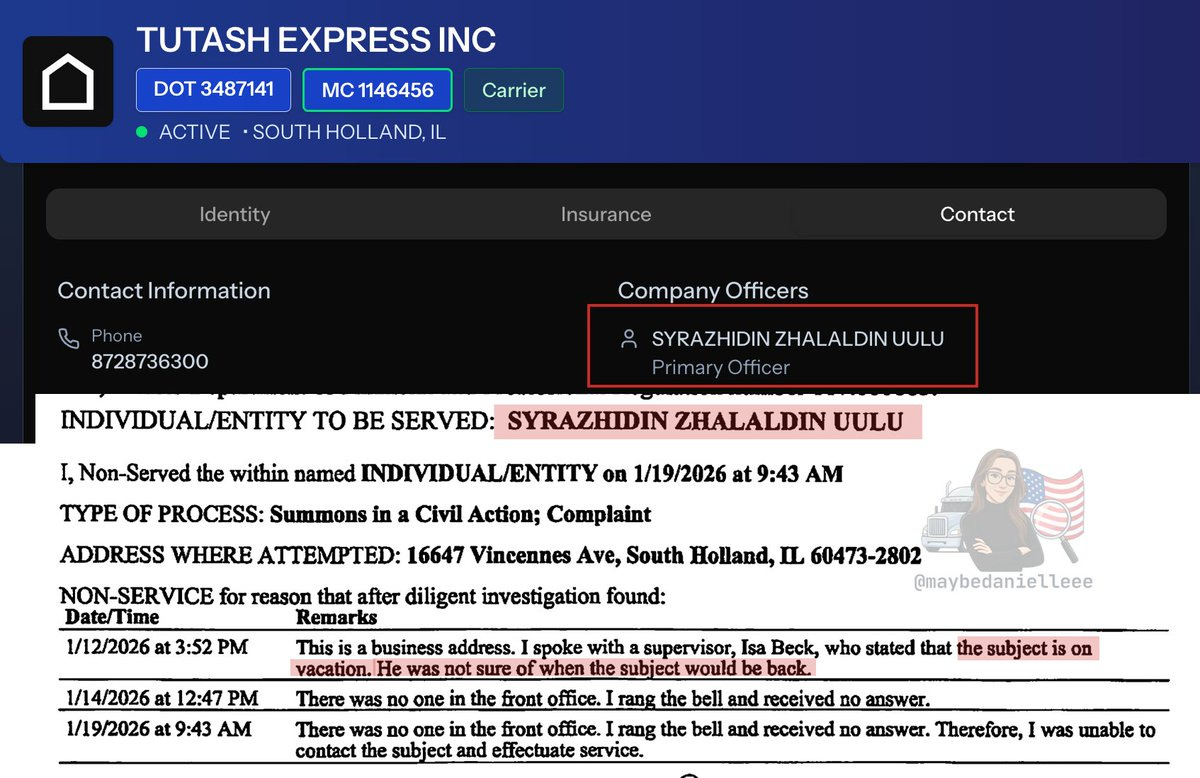
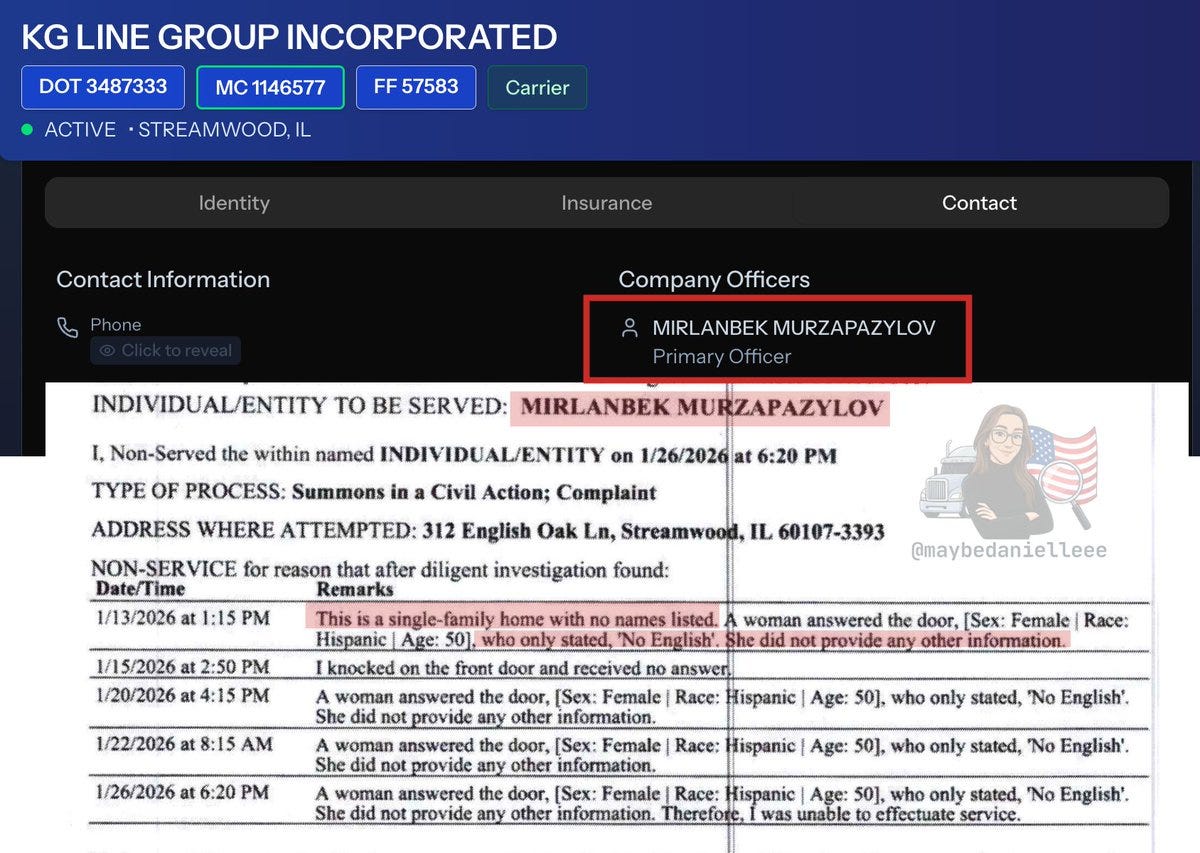
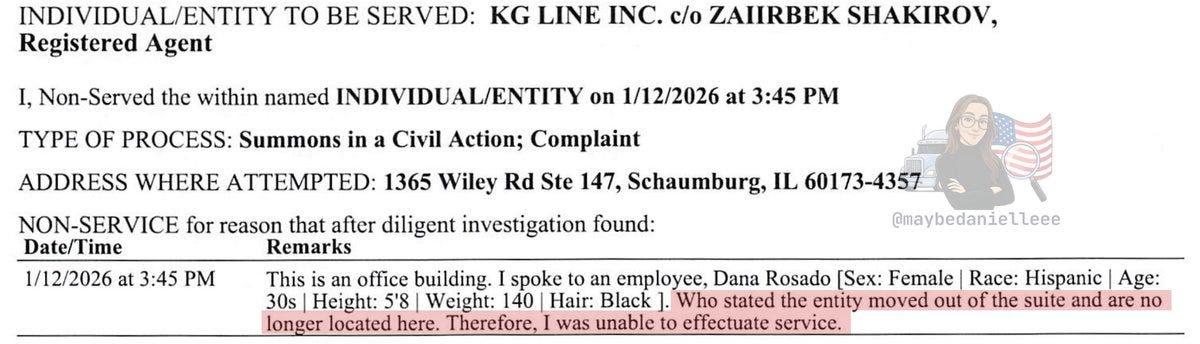
When the case moved forward, and summons were issued, process servers had trouble locating the people associated with these companies. Addresses led to empty offices or unhelpful answers. Service wasn’t completed for multiple individuals. Again, not proof by itself, but consistent with an operation that may be operating from somewhere else...


A Failure of Enforcement
Four people are dead in Indiana. They didn’t consent to being part of a political or regulatory experiment. They didn’t know what a chameleon carrier was. They didn’t get to opt out.
Nothing about this operation is buried or hidden. The signals are clearly visible in authority records, court filings, and social media videos showing placards being swapped at truck stops.
When motor carriers operate multiple authorities as interchangeable shells, when trucks and drivers move freely between them, and when insurance coverage depends on which logo is taped on that day, it is no longer a paperwork issue. It is a serious public safety issue.
The FMCSA does not need new rules to address this. The authority already exists. What’s missing is action. At a minimum, the FMCSA should:
Immediately review all active and inactive authorities connected by shared VINs, officers, addresses, and equipment tied to this enterprise.
Conduct a unified safety and compliance audit, treating these carriers as a single operational entity, not isolated companies.
Revoke authorities, if possible.
Examine ELD vendors used across these carriers for improper access or manipulation.
Close the loophole that allows drivers and equipment to rotate between authorities without triggering automatic review.
If all of this is allowed to fade into the background as just another “tragic accident,” NOTHING WILL CHANGE. Except for the numbers and company names on the trucks.
We do not have to wait for more innocent lives to be lost!
Editor’s Note: This article is based on publicly available court filings, FMCSA records, crash reports, and publicly posted media. The civil allegations referenced have not yet been adjudicated, and no findings of liability have been made. Descriptions of business relationships, operational practices, and compliance issues reflect claims contained in court documents or observable patterns in public records and are presented for reporting and public-interest purposes only. This article does not allege criminal guilt and should not be construed as a determination of fault. All individuals and entities named are entitled to due process.