

Back in 2016, I remember thinking that if I heard “truck driver shortage” one more time, I’d either throw my computer through a window or voluntarily check myself into a psychiatric facility.
…
The year is now 2025, and lucky for you, I haven’t thrown my computer or checked myself into a facility, but of course, the “tRuCk DriVeR sHorTaGe” is still in the headlines. It has been an ‘issue’ since the 1980s. Out of all the labor problems in America, we still can’t seem to figure out how to solve this one. There’s a quote that comes to mind:
‘Insanity is doing the same thing over and over again and expecting different results.’ — Rita Mae Brown
And no, before you protest, Albert Einstein did not say that. It is often attributed to him, but it wasn’t him. Sometime in the 80s the quote was associated with him, and much like the truck driver shortage narrative, people believe anything they hear.
Truth or (perpetual) dare?
In this context, dare is synonymous with lie, malice, and dishonesty. The perpetual push of the fabricated “truck driver shortage” narrative has continued year after year after year, a lie repeated and repeated… and repeated until it reshaped policy and public perception.
But what if there was never a real shortage?
What if this was never about a lack of truck drivers, and always about maintaining a system built on churn, cheap labor, and taxpayer-funded training programs that keep the financial river flowing?
What’s being sold as “workforce development” isn’t. It is merely a revolving door, and a financial scheme.
And you, good, tax-paying American, are the one funding it.
Disclaimer: I believe people deserve second chances. I believe there are immigrants who come to America in genuine pursuit of a better life for themselves and their families, and they do it legally. This article is not an attack on individuals.
What I do take issue with is how the system exploits those good intentions, using hardship, poverty, and desperation as fuel for high-turnover operations, running a once-highly respected profession into the ground… all while hiding behind feel-good language and streams of government funding, like “workforce development, boost the economy, and rebuild America!”
The CDL Pipeline —> Funded by American Taxpayers [you]
More student truck drivers = more government funding.
I could end the article here, but you must continue to see the receipts (screenshots). To keep this model running, the industry needs fresh recruits, and where do we find fresh recruits?
Young people, straight out of high school.
The latest recommendation is targeted at foster youth.
Immigrants, legal or not.
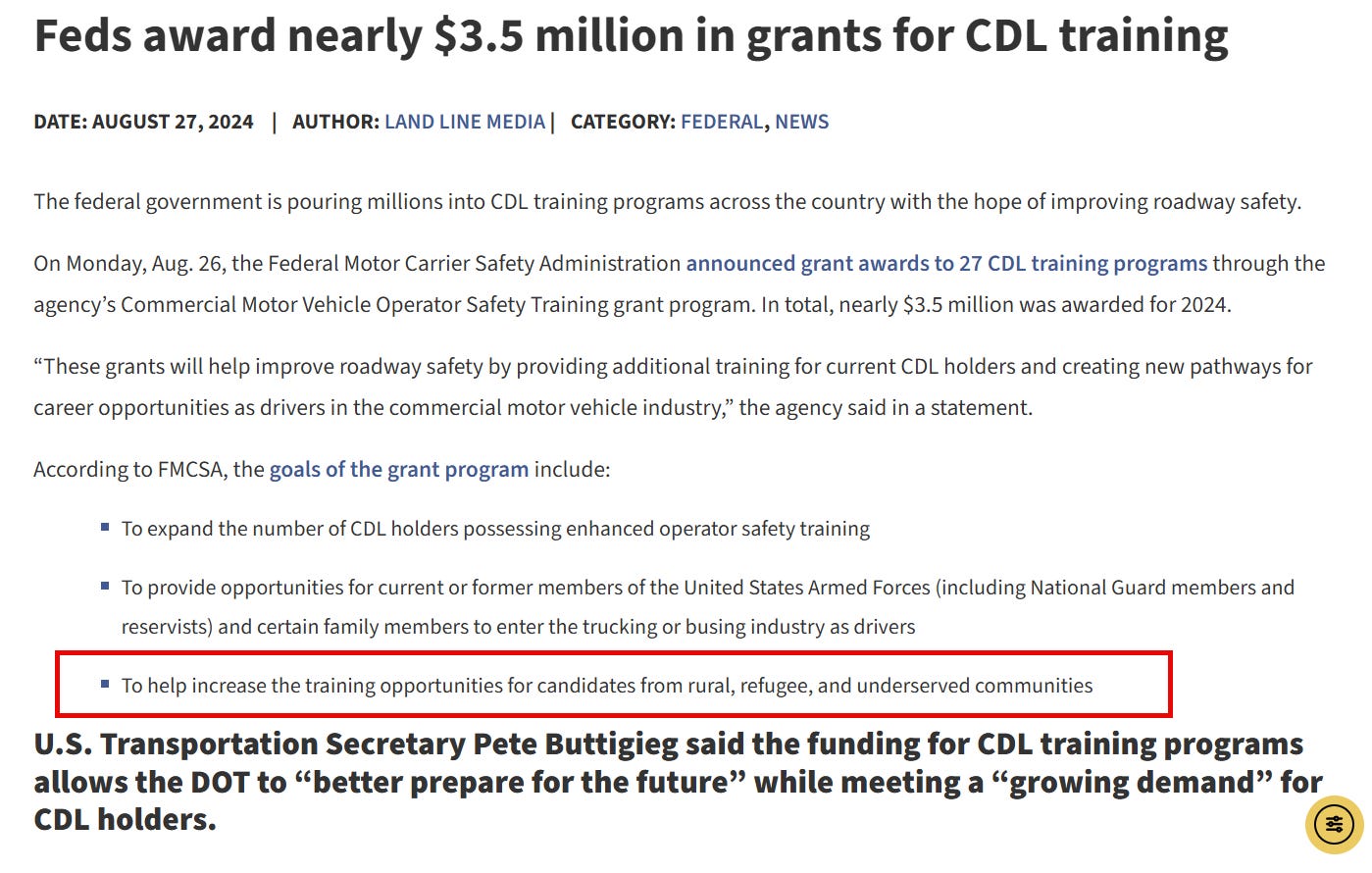
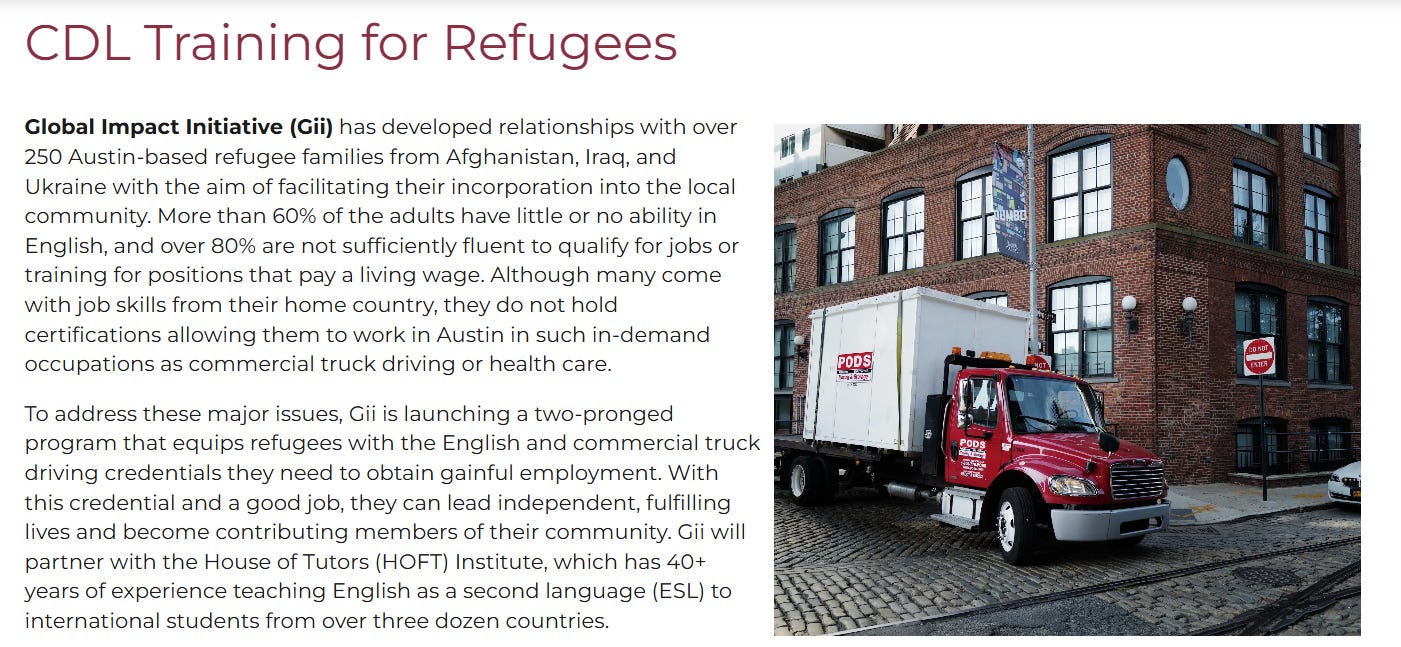
Refugees, freshly resettled.
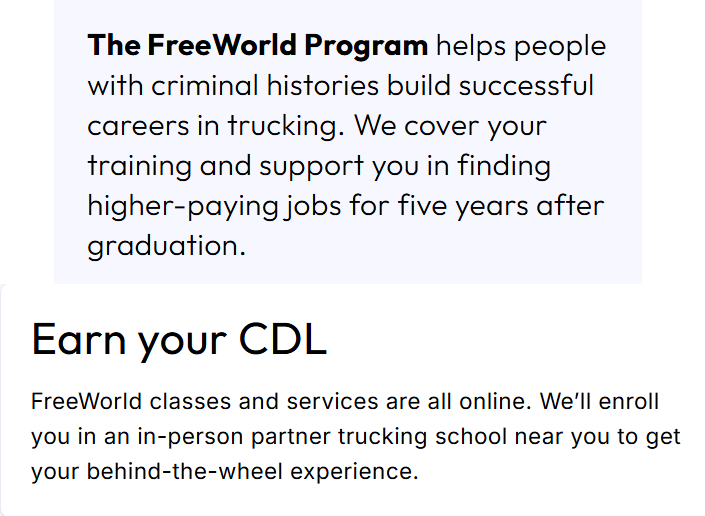
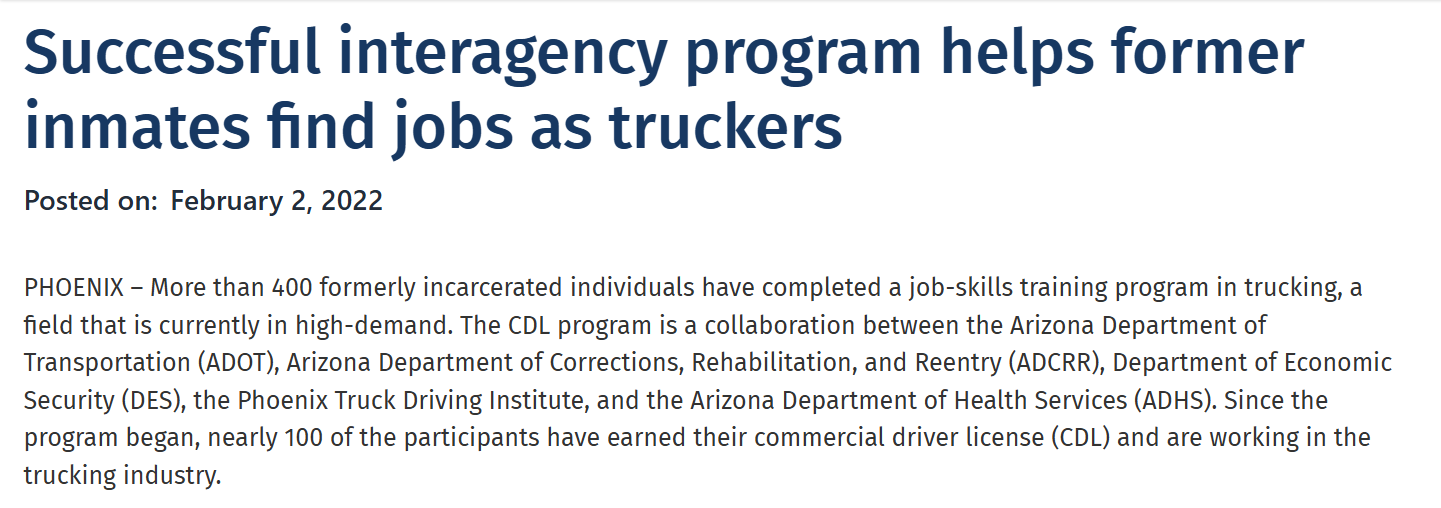
“Justice-involved” individuals, i.e., recently released from jail or prison.
And what do these groups have in common?
They all qualify for federally and/or state-funded workforce development programs. The taxpayer-funded programs that are designed to (or said to) “boost the economy” and “rebuild America.”
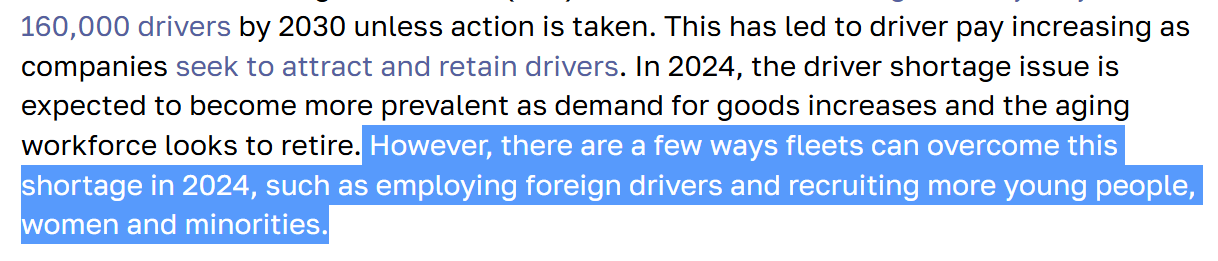
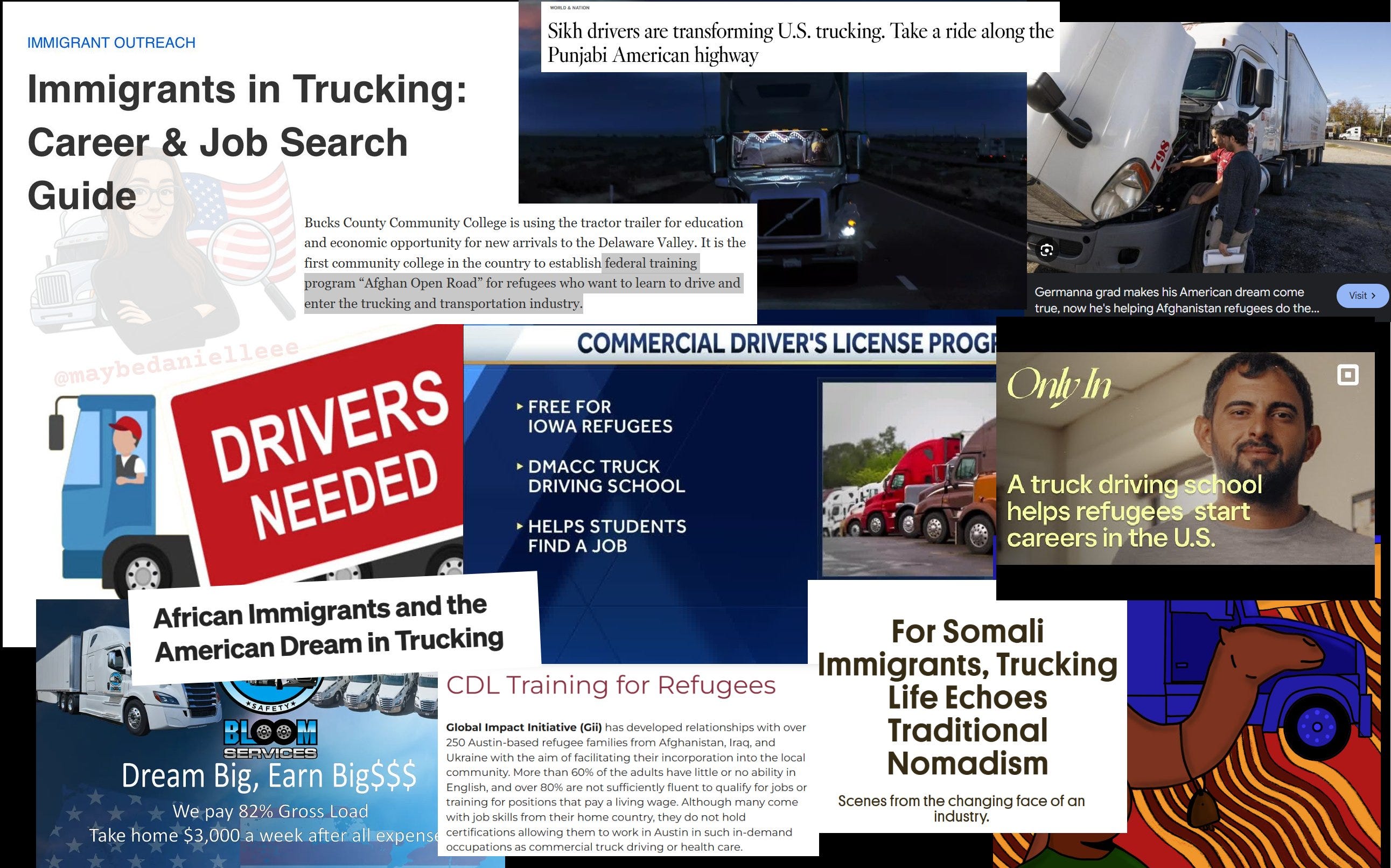
Oh, and we can’t forget the driver shortage. What’s the solution to the truck driver shortage? Taxpayer-funded CDL schools, federal grants, and nonprofit ‘training partnerships.’
This may very well be one of the most ludicrously malicious and negligent initiatives in modern American history.
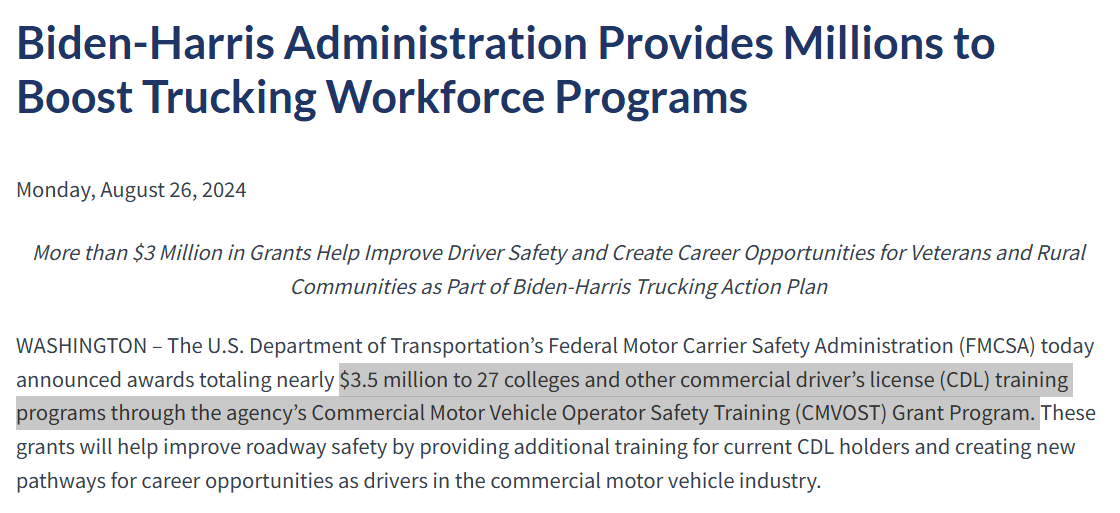
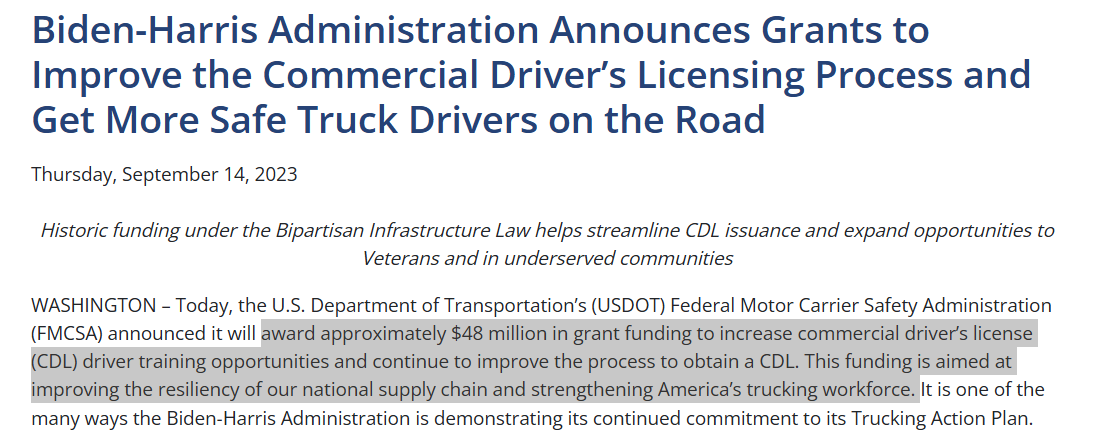
The previous administration poured gas on this fire, expanding funding streams and pushing “workforce development” as a fix-all.
$38 million here.
$43 million there.
$55.1 million somewhere else.
Who cares.

Note: I won’t dive into the tragic consequences just yet. That’s coming later.
Why “free” will never work.
The trucking industry’s workforce pipeline increasingly relies on a model in which individuals are paid to train/learn rather than investing their own money. While this may appear generous or pragmatic, from a behavioral psychology perspective, it erodes the very mechanisms that drive commitment, discipline, and long-term engagement.
Endowment Effect: When people work toward a credential, especially by investing their time, money, or sacrifice, they develop a sense of pride and stewardship. When credentials are given through fast-tracked programs with little friction, that same sense of value is often absent.
Sunk cost fallacy: When individuals invest their own money or resources into a pursuit, they tend to persist, even when it gets difficult, because abandoning it feels like a waste. But when the training is subsidized or entirely free, there’s no psychological loss aversion. Quitting doesn’t matter, as there is no meaningful consequence.
Zero Price Effect: “Free” has a paradoxical effect. Yes, it attracts attention, but two things can be true at once. It also diminishes perceived value. Participants in “free” anything exhibit low psychological ownership or seriousness.
Effort Justification: According to cognitive dissonance theory, individuals often assign more value to outcomes that required significant effort. But when CDL programs are framed as “barrier-free” or “fully supported,” the psychological reward mechanism that comes from struggle and perseverance is weakened.
And to the good part, here's where your money goes.

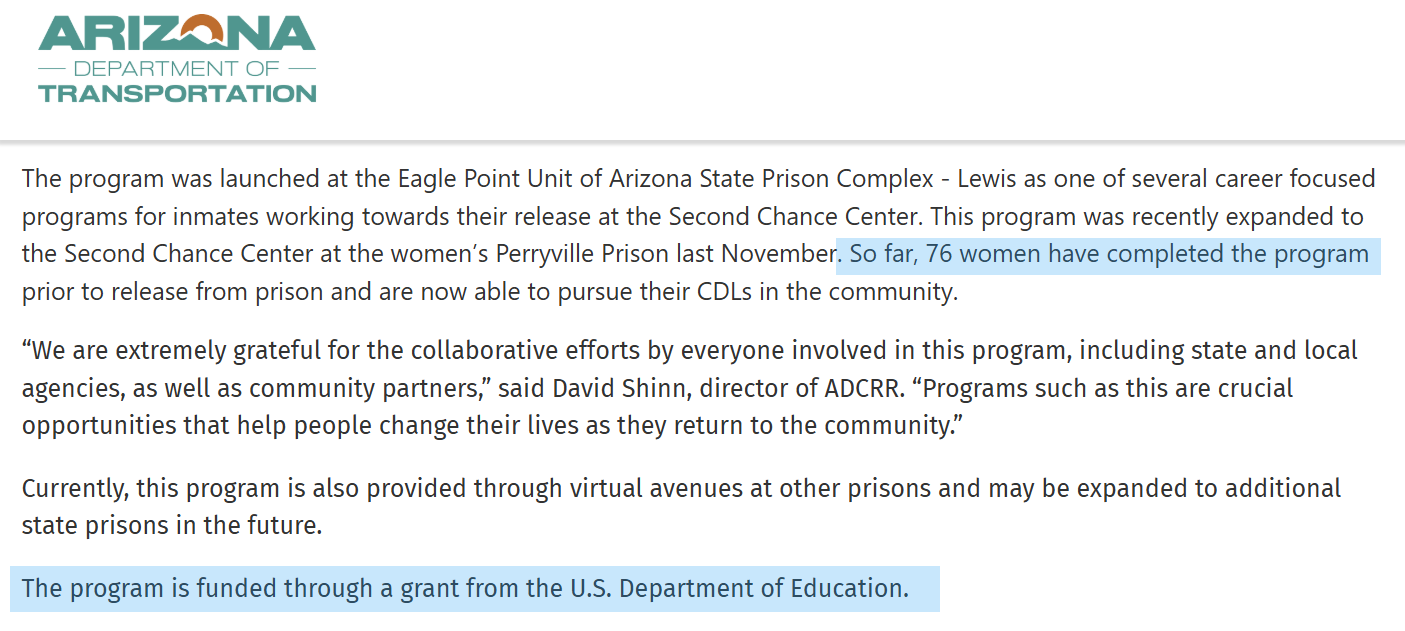
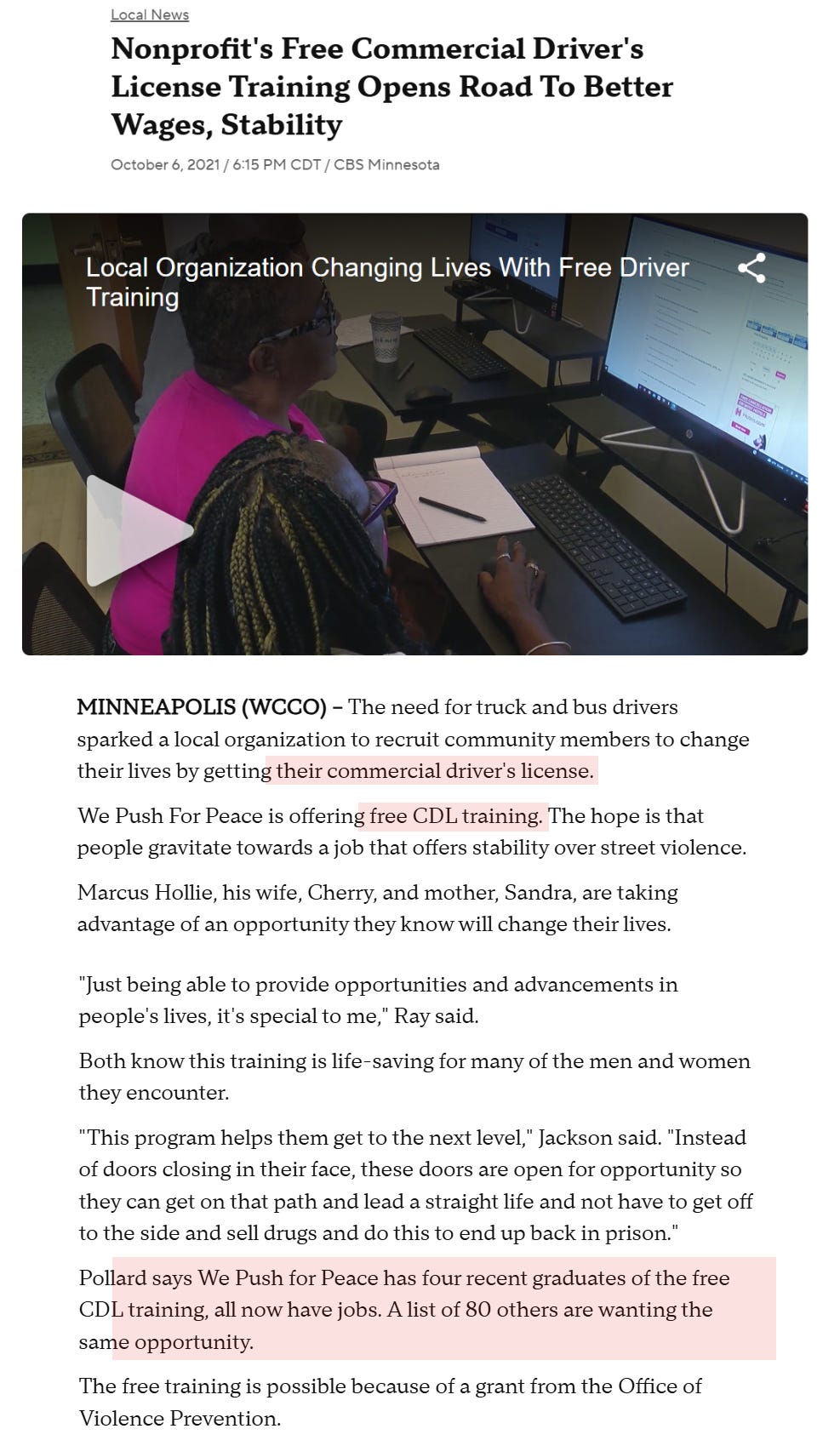
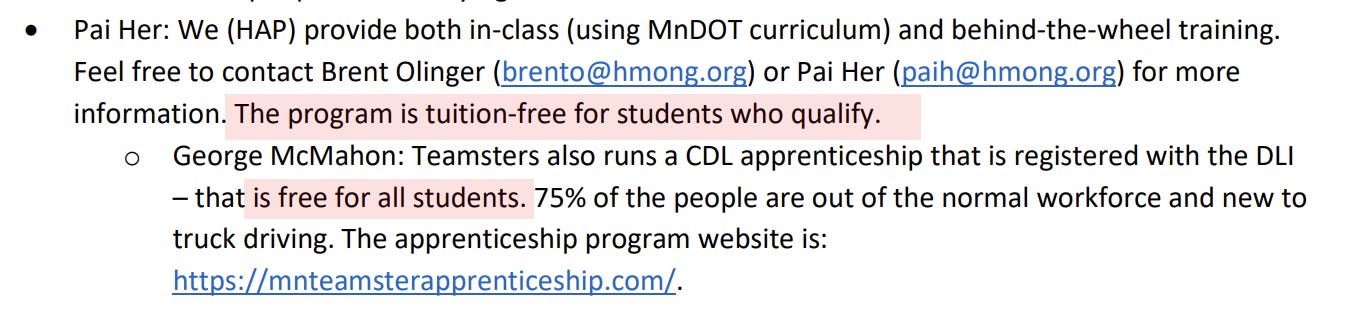
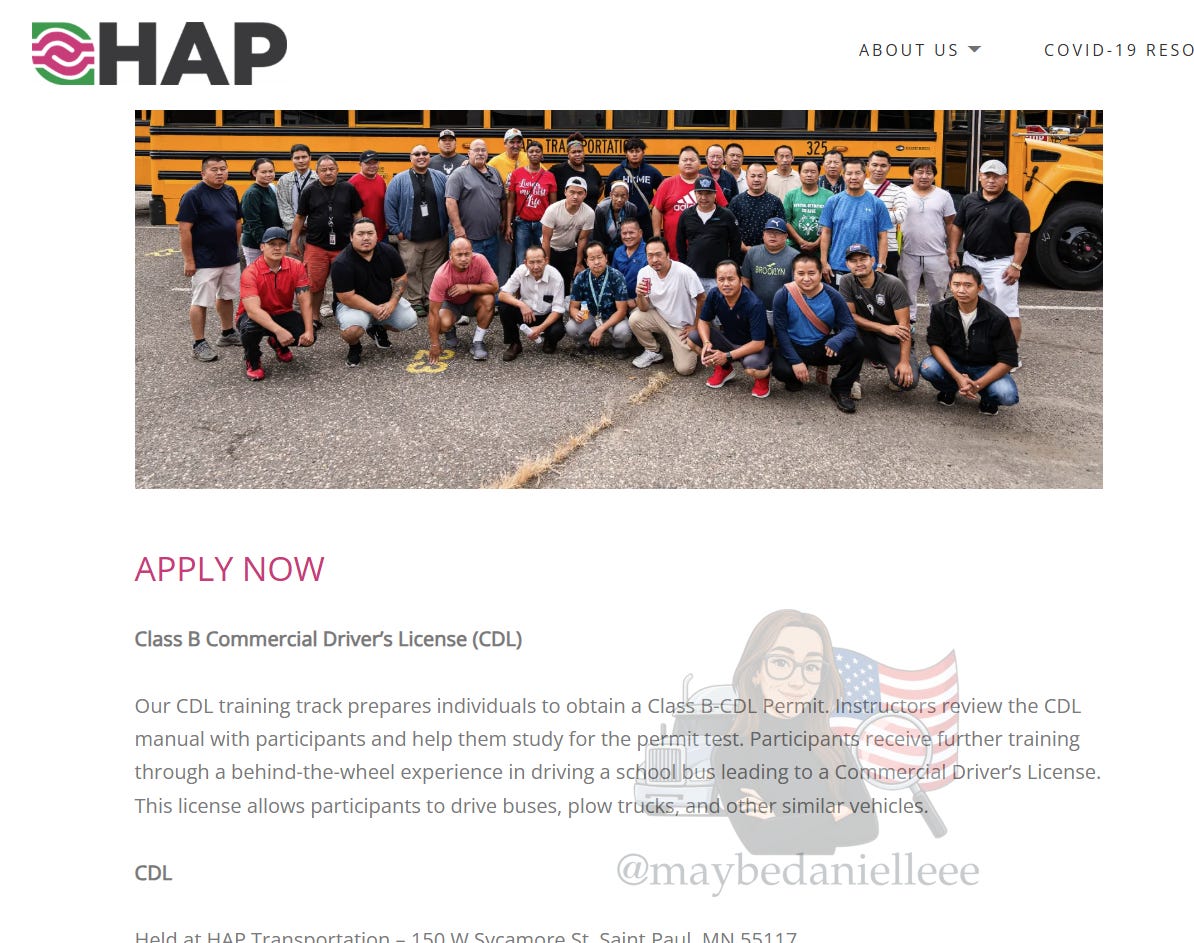



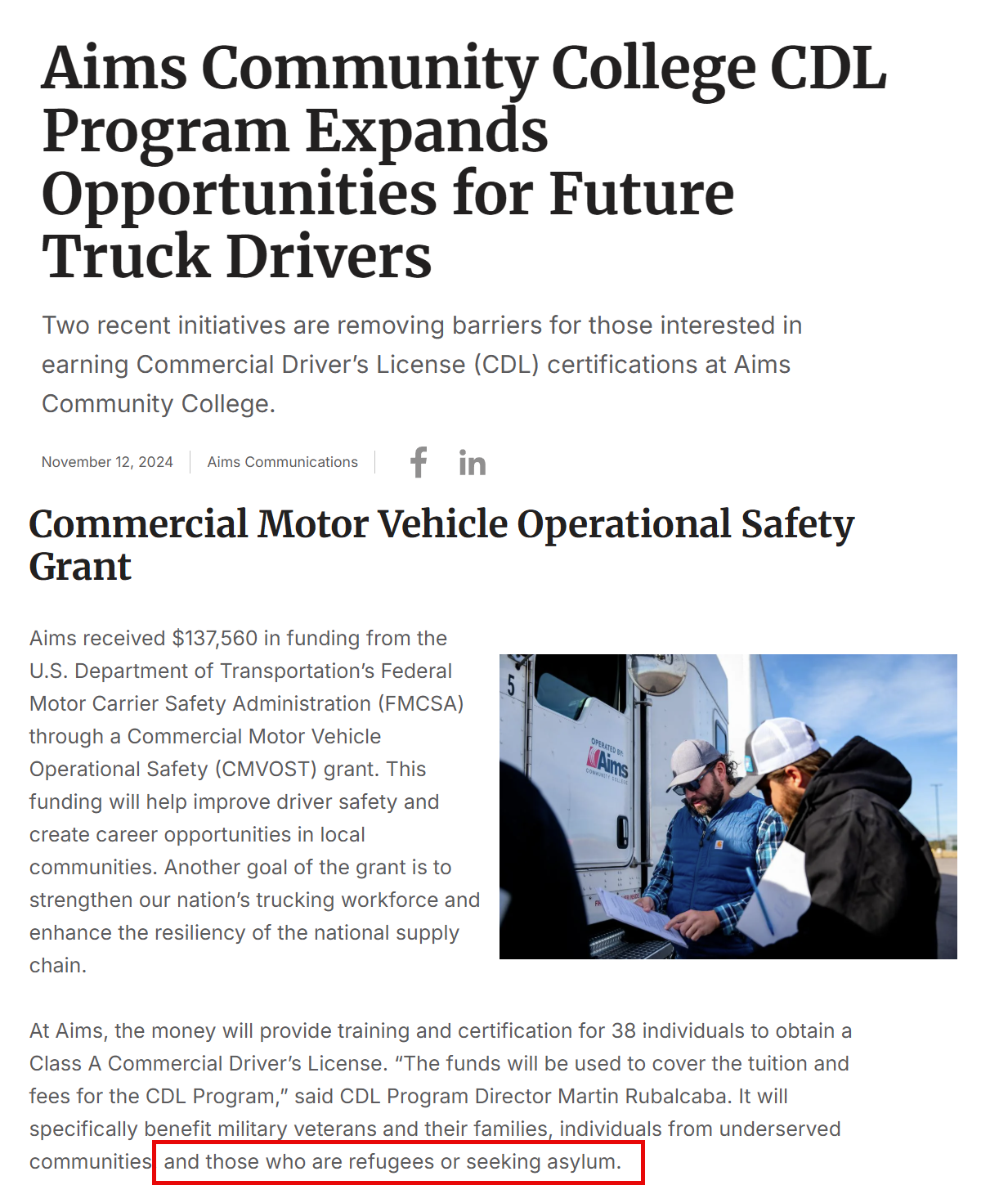

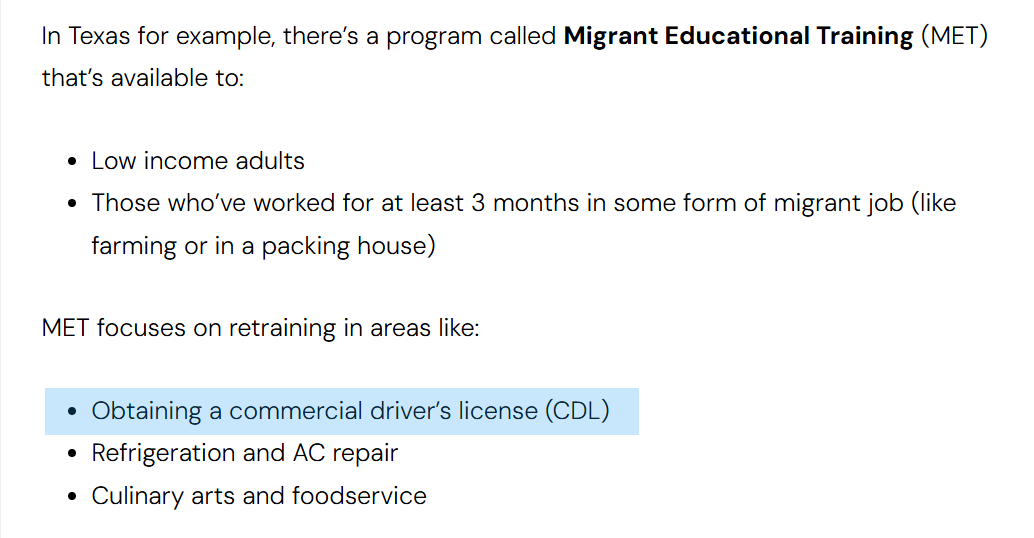
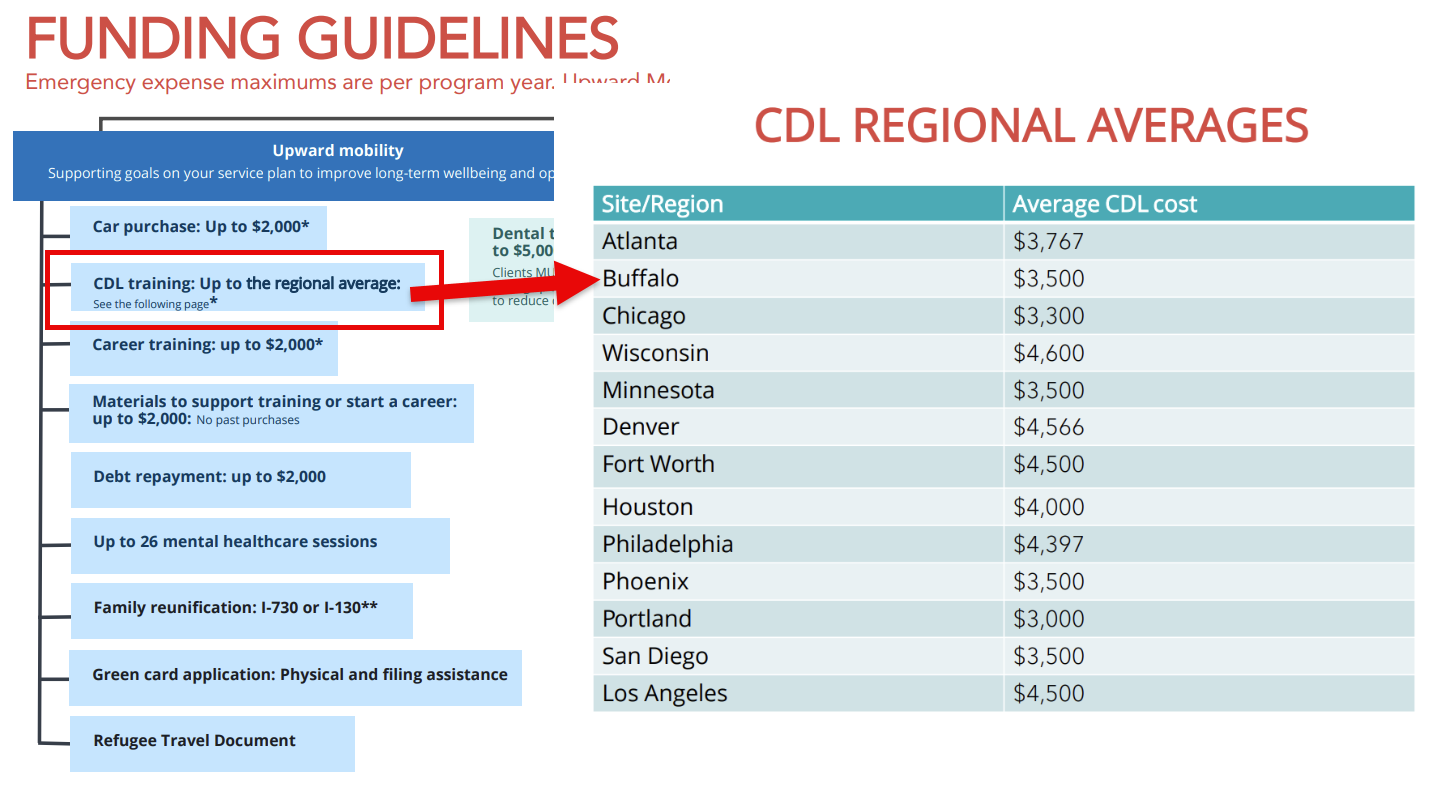

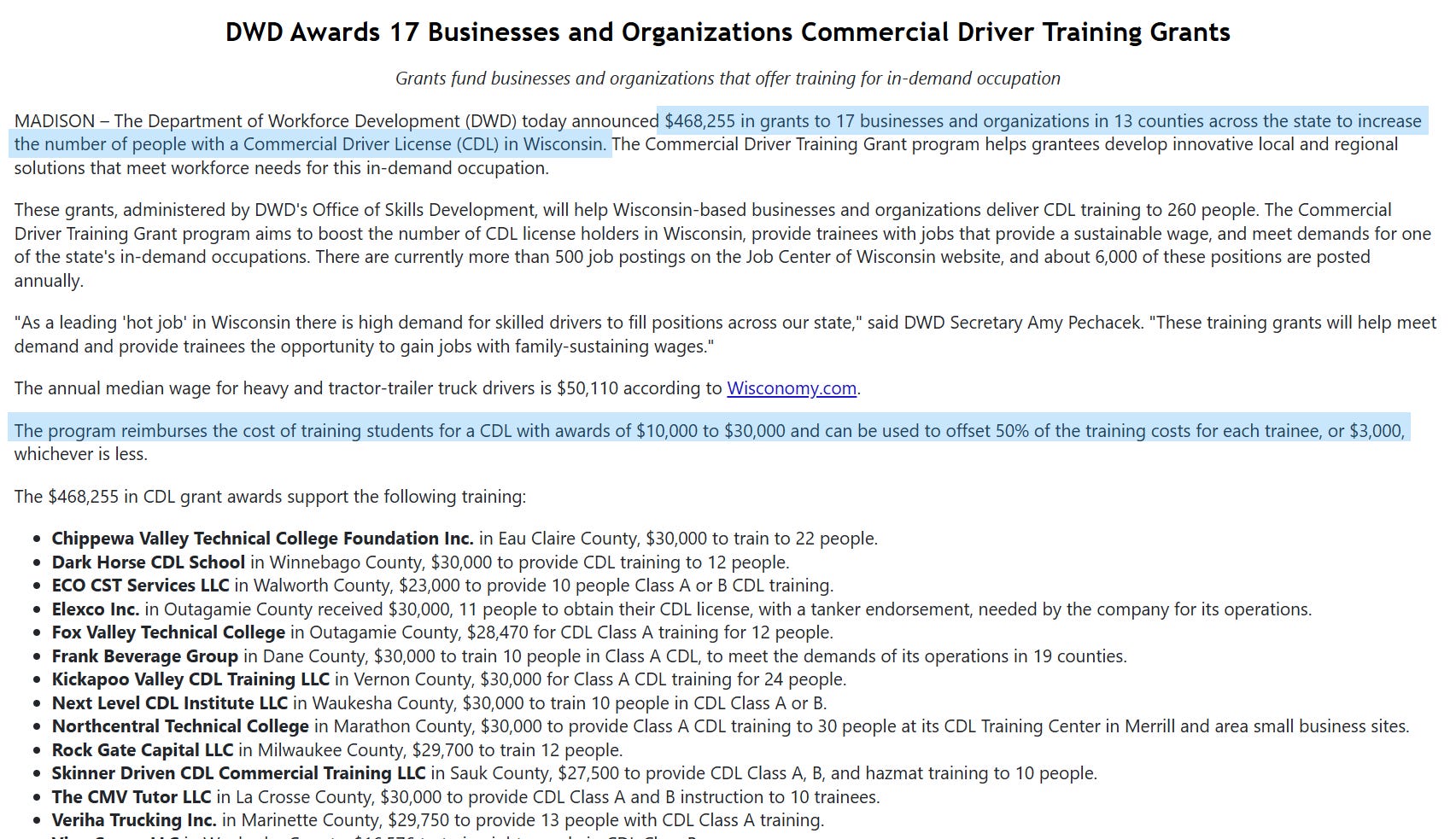

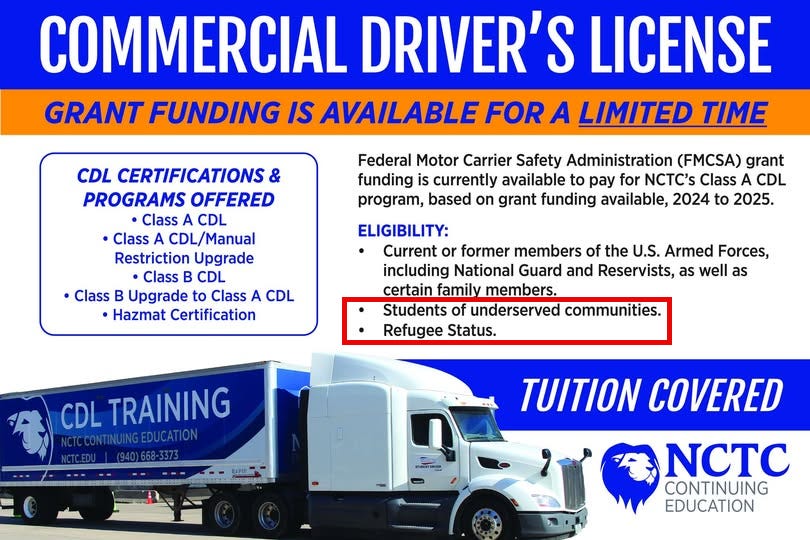
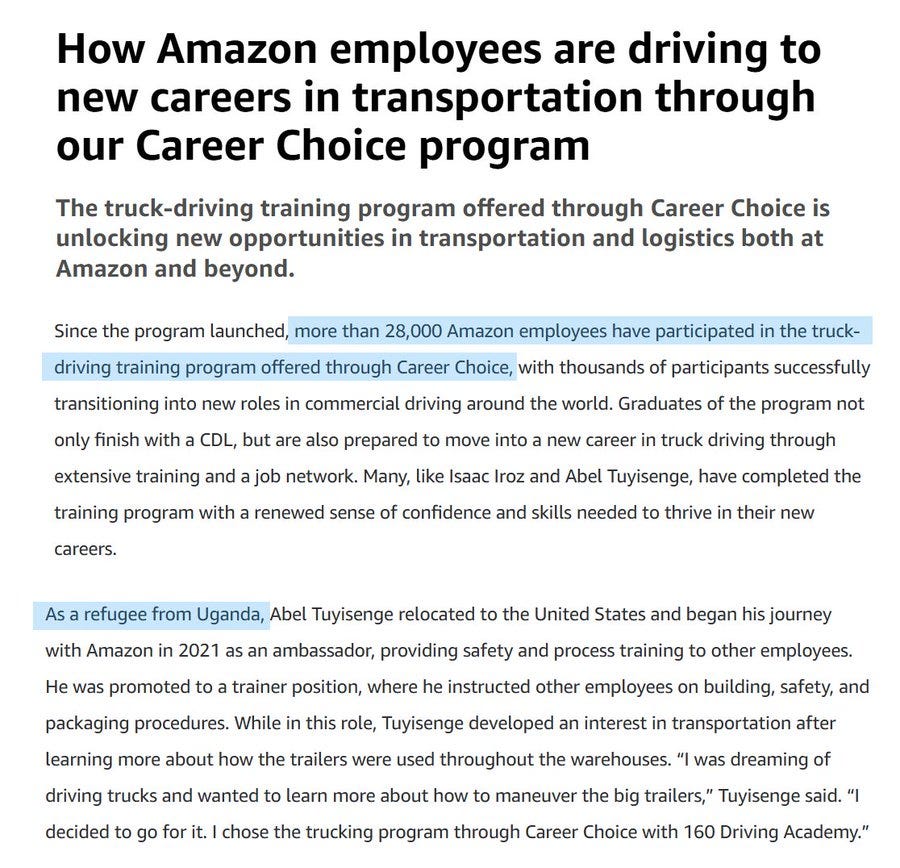


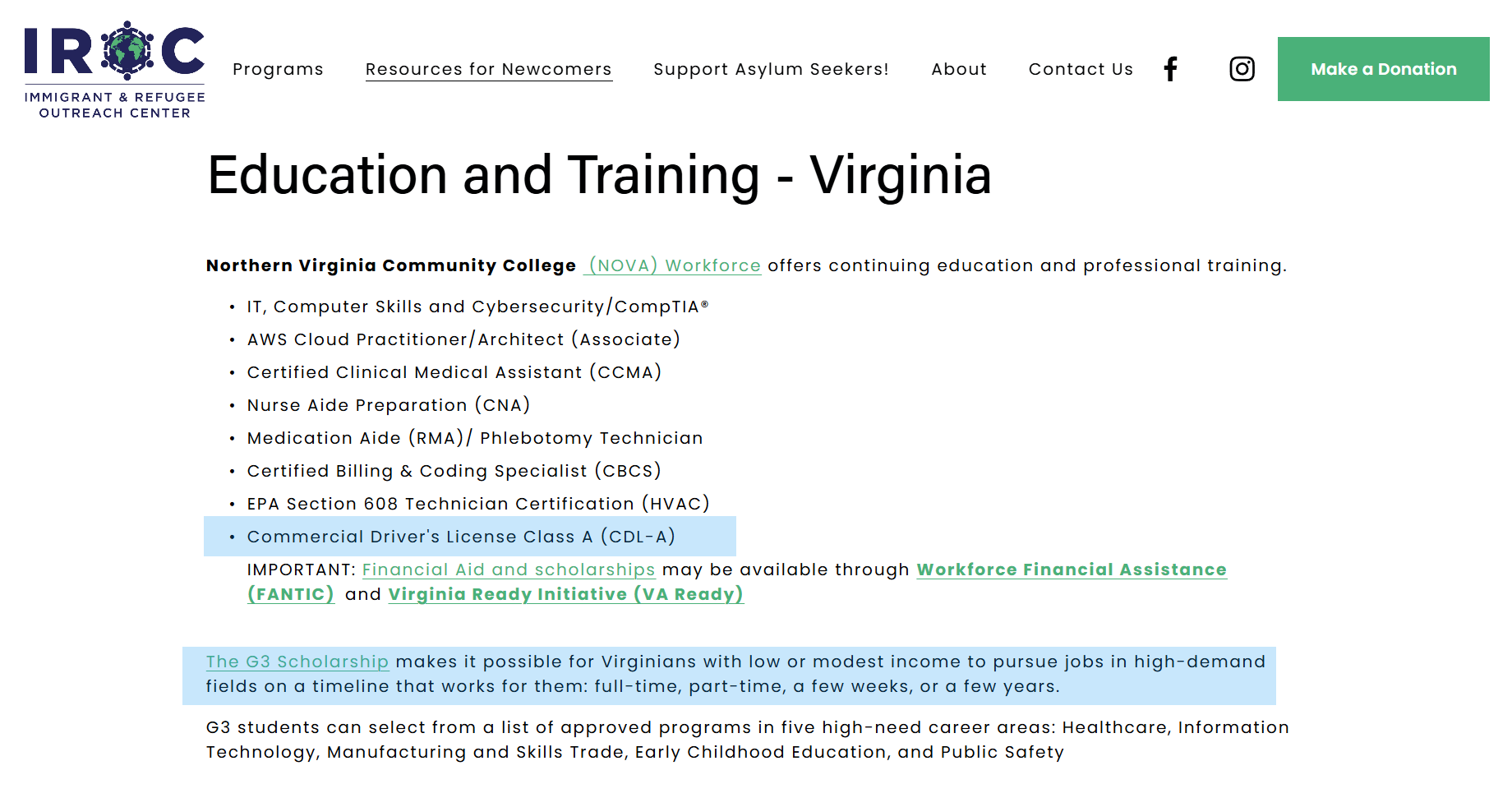
It’s my money, so what do I get out of this?
.. / -.. --- -. .----. - / -.- -. --- .--
Unfiltered Feedback from Social Media
I posted a glimpse of this taxpayer-funded CDL pipeline on social media, and it would be a disservice not to include the raw, unfiltered feedback that followed.
Someone is getting rich off this shit
Flood the system with low wage drivers and help the bottom line of the big carriers. All paid for by tax payers. What a sham!
There is no labor shortage, only a cheap labor shortage.
It odd spending over a decade trying to be the best you can. Developing skills and experience in a very dangerous profession. Then some sniveling little git, 7 years out of a PoliSci degree, employed by the FedGov writes a white paper on how someone who’s been in the country 5 minutes would do just as good as you in your job.
Taught how to get a CDL. Not taught how to drive.
Our tax dollars aiding in the great replacement of American truck drivers……smh….
Lots of anger simmering at truckstops across the fruited plain as American drivers have had it with unsafe,unqualified,foreign drivers destroying the industry and taking lives along the way.
Importing people from the 3rd world with 0 common values and no background checks will get you such stellar results.
There is no driver shortage. There are plenty of drivers just a shortage of good companies and too much regulation for the drivers that we have.
They are stealing USDOT stickers off of other trucks. I saw a video of them doing it.
please help bring attention to what has happened to the trucking industry. We are over run with cheap foreign labor, destroying American trucking jobs.
What is your plan to fix this? I hope you have one. Federal dollars going to “training” immigrants while Americans can’t get jobs. SOS
Its a systematic weaponization of the most destructive vehicles on USA roadways.
The injection of 15M foreign workers into the US jobs market that only created 5M jobs in that 2 years , with 1M of those workers being placed in transportation jobs, that’s what has depressed wages n rates to the poverty level !! That’s intentional destruction of industries!!
"At no cost to you" It's incredible what the state offers these people that they would never offer their own citizens. I went to DMACC, nobody offered me free or discounted education.
political establishment filling the country with "labour oversupply", so their crony capitalist friends benefit with higher profits off your taxdollars
Final thoughts
The research work isn’t finished here. This is just the tip of the iceberg.
We’re not investing in successful trucking careers.
We’re funding the precious, fabricated “truck driver shortage” narrative.
Meanwhile, the truck drivers who actually care, the ones who built this industry, who’ve run generational trucking companies with pride and skill, are getting steamrolled. We’re pushing well-respected, qualified American truck drivers out of business to make room for churn, burn, chaos, and cheap labor.
This is doing everything but fixing the American trucking industry.
If you made it this far, thank you. Truly.